 RetroFed
TheGreayingGamer, thegreayinggamer@ttrpg.network
Instance: ttrpg.network
Joined: 3 weeks ago
Posts: 72
Comments: 2
Posts and Comments by TheGreayingGamer, thegreayinggamer@ttrpg.network
Comments by TheGreayingGamer, thegreayinggamer@ttrpg.network
 At A Glance@ttrpg.network
The Rulebook Overall, I think The Hero’s Journey 2E is a very good game. I don’t have any serious nits about the game and think you get amazing bang for the buck. As of 7/8/26, the pdf is $14.99; softcover is $29.99; the hardcover is $39.99; the softcover combo is $34.99 ($44.98); and the hardcover combo is $44.99 ($54.98). The purpose of this, for me, is to go through the book and highlight what I feel are its high points and, if any, the low points. Let’s get into it. The intro I like because you get a glimpse into his headspace as to why he did the 2nd edition, which was a nice touch. The rules start with the attribute chapter, and right out of the gate, we’re told rule number one is the Narrator has the right, and is encouraged, to modify the rules as needed. The game uses the standard polyhedral set of dice d4 - d20 that most of us are familiar with. Attributes are broken down to Might (STR), Finesse (DEX), Resolve (CON), Insight (INT/WIS), Bearing (CHA), and Weal (the wild card). One thing I like about the attributes is you can get a +5% bonus to XP for meeting certain attribute minimums. These are stackable with other attribute bonuses, as well as archetype and lineage bonuses up to a maximum of 20%. Professions are an interesting add, in my opinion. Some games include the notion, some don’t. Roll 1d100 for profession. Alternatively, the Narrator will allow you to pick one. Each offers starting gear and gold. Shaded boxes are also included to introduce optional house rules. Another nice addition. There are several different lineages, each with a dice pool for attributes and level limits for each archetype, as well as lineage specific skills. First is the Changeling. They are, by my interpretation, they are humans that are just slightly different. They experience time slightly differently, can see the unseen, and have an unnatural presence, among other differences. They do best as a Swordsman, able to reach level 10, while they aren’t known so much (or it isn’t their strongest suit) for bearing the mantle of Knight, only able to achieve level 4. They can achieve level 7 in the other archetypes. Next is the Dwarf. Pretty self-explanatory. Their archetype maxes (like the others) are unique to them. They are best as Warriors (level 10), least known for Knights (level 3), and can’t be a Wizard. Then we come to the Elves. They are known as good Wizards (level 10), but not so much for being Knights or Yeomans. Half-elves come next and are the world’s Bards (level 10), with the ability to achieve level 7 in each other archetype. Second to last, we have the Halfling. Each Lineage is “known” as the “best” in a certain archetype (meaning typically they can max level in one specific archetype), and the Halfling is the Yeoman. With the Lineage/Archetype combo, what comes to mind for me is Samwise Gamgee. They are also the only other Archetype that can’t play as a Wizard. Lastly, we have the most adaptable and common lineage, humans. Also included for humans is a variant Lineage: The Errant. Errants are not native to the world, but come from a world where the stuff they see and and experience here are considered fantasy and fictitious where they are from. Archetypes Being an XP based game, each Archetype has an individual advancement table for XP, Endurance (HP), Attack Bonuses, etc. There are also minimum requirements to play each archetype. Each Archetype has specific abilities as well. One can play as a Bard, Burglar, Knight (the artwork throughout is amazing, and the artwork for the Knight all I hear is Jamie Lannister’s voice “Brienne of f’ing Tarth"), Ranger, Swordsman, Warrior, Wizard, and Yeoman. The Equipment chapter is pretty representative of what one would expect to find from a fantasy game and prices are typically listed in Gold Pieces. How to Play This chapter is pretty well written and breaks down how to play. For me, there are some notable rules. The first is about gaining XP. This isn’t a combat heavy game and is not actively encouraged as the Endurance scores at 1st Level are mostly 6 - 8, with Wizards starting at 4 (before any applicable bonuses). Because of this, no XP are earned for combat or body count. There are XP Rewards the Narrator can issue to players on an individual level and some are included in the book. These include: accurately playing lineage and archetype, attempting a potentially deadly act of heroism, making everyone laugh, etc. That’s not including any bonus percentages. Another is advantage/disadvantage. When one is declared, roll 2d20 and take either the higher or lower number. Next is the notion of Despair. Each creature has a Despair rating, and each PC has to make a roll if the creature’s Despair rating is 5+ the player’s current level. So a level 2 character has to roll on Despairs of 7+. Failure of the Saving Throw hinders the PCs attack ability. Also, if they’re in a blighted land, a failed Saving Throw means rolls are at disadvantage while in the area. Last is the concept of making camp. It’s something I think most of us gloss over as gamers. Here it’s assumed you have to search for food and a lack of food means a Saving Throw and failure has consequences. Not enough rest has consequences. If you state the group is going to “relax around the campfire,” a successful Saving Throw gets each PC advantage on a Saving Throw the following day. Magic I particularly like how magic is handled. There are 21 spells spread across 3 levels of spells: Apprentice, Journeyman, and Master spells. When you cast a spell, a successful roll nets one of 3 possible outcomes. As an example, you cast “Breathed in Silver.” You can opt to “Befriend the Fool,” have a “Lingering Phantasm,” or cause a “Slumbering Sting.” Each option causes a different effect under the umbrella of the specific spell. The chapter on Running the Game gives one the basics of what they need to run the game. The Menagerie chapter offers a wide variety of baddies to choose from: avians, demons, dragons, elementals, giant-kin, strange creatures, and others. The other keynote point in the chapter is wandering monsters. The game is all about the story and random encounters can seem jarring and out of place. The last chapter is, to me, one of the most interesting. As you level up, you receive myth points. These are used to purchase Aspects, which empower your weapons, armor, and shields. Examples include: Balanced, Cold Iron, Grievous, and Renowned. There are also heirlooms. Each lineage has them and you can use myth points for them as well. Both are a nice addition to the game and add some depth and character to a game that already has a bunch of both. In the appendix, James M Spahn lists some inspirations of his: literature, films, and RPGs. This isn’t a point by point breakdown, and was never meant to be. These were just the high points that stuck out to me. Overall I think it’s a great game with a lot of potential. This is just a surface scratch to give some first impressions. When you look at all the available material, it allows for a wide variety of stories to be told.
At A Glance@ttrpg.network
This series is designed to be a quick look at the games in my collection. These games are ones I picked up after 2019. It’s not designed to be a page by page review or even a nitpick session. Just some general impressions.

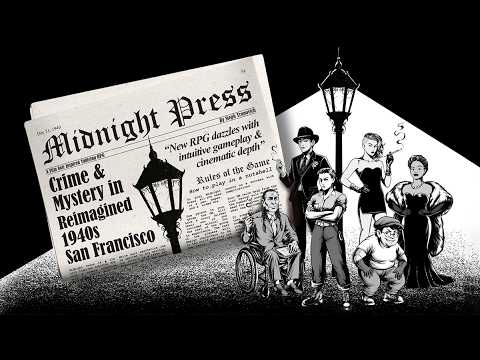
Midnight Press
Moonshine Preview
https://youtu.be/5hIV-l_u0lc I have the rules coming for this. The ‘At a Glance’ will be up in the next couple weeks.
White Box Cyclopedia - Barrel Rider Games
This is based on, and compatible with, Swords and Wizardry White Box (from the back cover). It starts with basics: abilities, alignment, HP, etc. Then goes into heritages. There are 4 main ones and 11 optional ones. Optional ones include: half-elf, half-orc, gnome, and goblin. Up next is classes. 3 mains here and 23 optional ones, such as: jester, friar, and tomb raider. Chapter 4 is equipment, accolades and personnel. Chapter 5 gets into playing the game. There have been tables galore and it doesn’t disappoint in this chapter. Chapter 6 is all about magic and spells. The last 3 chapters are pretty much all for the referee. Chapter 7 is running the game and gives a couple campaign ideas that are more than just fantasy. Chapter 8 is the bestiary. There’s a wide variety of monsters and critters to choose from. Lastly is treasure. Magic items, gems, and gold. Was a Kickstarter purchase. $30 got pdf and an at-cost link. As of 7/16/2026, prices are: pdf $12.25/hardcover and combo $59.99.
Dragon Slayer - Gila RPGs
This was the most recent Kickstarter I did. Funding was 7/29/25 to 8/12/25. I did the $30 buy-in which got pdf and physical copy. Could have just done digital for $20. Estimated delivery was January 2026, and I received it January 12, 2026. This is my first experience with the Slayer System, and I think I like it. It does use the wonderful polyhedrals (d4, d6, d8, d10, d12) and you may use multiples of said dice. Any dice roll made needs 4+ to succeed. It’s pretty rules lite as well. Chapter one is rules. There are 13 pages (with art) and cover everything players need to know. They introduce the notion of stepping up or stepping down a roll. You might go from a d6 to a d8 or d6 to d4. There are some skills and potentially skill checks during your exploits. Knowledge domains exist as do checks. Perception checks don’t though. The thought is if you want to search for traps or see whether or not someone is in the room, say that’s what you’re doing and the DM will tell you the information. Chapter 2 is combat. Movement and range are considered relative in the game, like many things. There are several types of actions one can take during their turn, again only needing 4+ to succeed. Character creation follows next. No Races are listed as in the game there are no race advantages or disadvantages. There are 8 classes, each with a unique set up, so some classes are stronger or better than others, but they complement each other. Chapter 4 is items and mainly covers magic items and consumables as well as wealth. Chapter 5 is about adventurizing. Distance is a relative notion. Resting is covered in the basics. Leveling up is every 5 XP. Monsters and a bestiary come next. There are 37 different creatures, not including dragons. All have stat blocks with all available actions. Chapter 8 is all about dragons. Dragons have their own combat rules. They get their base actions plus 1 action per PC. Last is the DM section and gives clarification on what needs it. First impression of the game is positive. This would be easy to teach on the fly, even if one is new to gaming.
Tiny Taverns: A La Carte - Robert Denton III Gallant Knight Games
This is the first expansion for Tiny Taverns. As of 7/16/2026, the prices are: pdf $3.49/softcover $12.99/combo $13.69. It’s 57 pages plus a 2 page character sheet. The book starts with a sample tavern, The Fish Inn Ship and its background. It initially belonged to a sorcerer. The sorcerer vanished and it was eventually sold. It’s still a functioning ship as well as a tavern and B&B. It sails the coast going town to town, staying a period of time, and then moving on. There are a lot of things that can be found on the ship of a magical nature. They include: 4 regulars (players can make their own with the character generator). There’s even a new Heritage, The Bloam. There are rules for playing without a combat mode, utilizing contests and the like. If using standard combat, HP reaching zero doesn’t really mean death, just that they were ‘damaged’ enough to give up. There are several entries in the bestiary, such as: Beer Elemental, Dawnwing, and Giant Moth. Then there are some adventure hooks and should be at least mostly adaptable across Tiny D6 with minimal adjustment.
Tiny Taverns Robert Denton III Gallant Knight Games
Back in my Tiny Gunslinger review, I remember saying I may review this one day, but not that day or the next. Well, the day has finally arrived. As of 7/16/2026, the prices are: $10.49/softcover $24.99/hardcover $29.99/soft combo $28.49/hard combo $33.49. This has a little crunch to it, but that isn’t a bad thing. The gist is the game is the PCs own/work at a tavern. There are character sheets, but there’s also a tavern sheet complete with a section for clientele and staff. It’s set up to be a “slice of life” game. I originally did the pdf for this back in the day for the Kickstarter for $10, so I’ve had a version of it since it was new, I just never got around to doing anything with it. After the usual introductions, chapter one is basic rules. The standard Tiny D6 rules apply, but there are more types of tests. Save tests, chore tests, notice tests, and charm tests are just a few of the tests. There are conflicts and they take the form of contests, quarrels, combat, and action scenes with some more specific rules for each. Combat is handled a little differently. Think bar fights and oral arguments as primary conflicts. Of course, with that comes injury, physical and mental. 3 minor injuries or multiple major ones equal incapacitation. A major injury wile incapacitated equals death. You can recover from your injuries, depending on how you were injured and healing times can vary. They finish the chapter by discussing the different types of magic and how to use it. Next is Tavern and Character Creation. The group starts with basic tavern creation. There are 6 steps to start with, like: type of tavern, location, naming it, and creating regulars among them. Then create the PCs. There are 8 heritages including: Pooka, Mandrake, and Firbolg. After picking traits and proficiencies, each decides their job at the tavern and it can be anything the GM allows. Finally, create some additional resources. Next is During the Game. Rules on how to gain XP and what it can be used on for starters, as well as moods and afflictions. It also goes into potions, tonics, and such as well as buying stuff. Last is the GM Toolkit. This starts with advice to get your GM brain into “Slice of Life” gaming as opposed to “Save the World” gaming, not that one couldn’t go that way if the group decided. There are different mini-games that can be employed, and it is good. I probably should have backed the physical copy at the time, but decided not to for whatever reason.
Destiny of Tides: Tiny Dungeons 2E Campaign Setting by Robert Denton III Gallant Knight Games
Apparently I needed more Tiny D6 reading material. I don’t know if its the first supplement for Tiny Dungeons, but there’s definitely a lot to it, 168 pages worth. It’s a complete setting for Tiny Dungeons, though you will need the Tiny Dungeons Core Rules to play. Prices as of 7/16/2026 are: pdf $10.49/softcover $24.99/hardcover $29.99/softcover combo $28.49/hardcover combo $33.49. The book starts with a short story to get us in the mood for the setting. We get a short introduction which, of course, helps to explain what to expect as well as some inspiration for the setting, which include the Tale of Urashima Taro, The Little Mermaid, and A Lull in the Sea. Chapter one is “A World of Vast Tides.” The surface population is gone, destroyed or removed by some unknown device. It starts by giving an idea of where life lives underwater and a quick glance of the civilizations. We get some of the wonders next, like The Deepstones and The Palace of the Sea Dragon. Then is a section on playing an underwater character and how it differs from playing a land one. After that is how to deal with going on land when one has to and how to make sure one survives (which one can for short periods of time under the right circumstances). The next section includes 5 Heritages (Kirkusui, Hykarchos, Lulutani, The Kayde, and Duwanni) and their society, personality, culture, and how they deal with being on land. Oceanic Magic, and its various types, are discussed last, because while it takes place underwater, it is a fantasy setting. Chapter 2 is character creation. Not too different from other Tiny D6 games, but some changes. There are ‘unanswered questions’ to answer, some new traits that can be used in addition to those in the Tiny Dungeons Rulebook. Chapter 3 is The Ruined World. It deals with the dangers and challenges of being a water based creature on dry land. It also goes into what one can find and encounter in the ruins. Any people that may have survived would scarcely resemble their ancestors in actions and thoughts. They would be human/elf/whatever in appearance alone unless the GM decides otherwise. There is a ruins generator and some tables with what can be found in various locations. Chapter 4 is an adventure ‘The Ruined Lighthouse.’ Someone (a young’un) has gone missing and you and her sister must find her. Hijinks ensue and hopefully you can save her. There are giant eels, giant moths, and a good old dungeon crawl of a lighthouse, complete with spoils. Lastly is ‘Sunken Secrets.’ This deals with what brought the surface world’s demise. There are 5 ranks of revelations and the group must achieve X Rank 1 Revelations before moving to Rank 2 and so on, leading to the end of the campaign. I was very impressed by this. A supplement that actually supplements the base system and brings something new to the game while still being able to adapt it to other games in the system. It’s different enough to be interesting and could be considered its own game, while being an established one.
Alan Bahr's Fallen Justice A Tiny Supers City Book - Gallant Knight Games
Per the back cover: this is the first expansion for Tiny Supers and covers the Iron Age of comics. DTRPG prices as of 7/15/2026: pdf $6.99/softcover $19.99/hardcover $24.99/combos $2 more. It has 2 chapters, totals 65 pages, and introduces new rules and a new city, Haven City. Chapter 1 is titled “New Rules,” and starts with 10 new archetypes. What’s interesting is they all have the “Average” trait, meaning they can’t take superpowers. Archetypes include: Adept, Crusader, Legend, and Vigilante. The next section covers optional rules for equipment kits and utility belts. Equipment kits include: burglar kit, climber kit, and surveillance kit, and these and utility belts can be used in lieu of regular traits. Utility kits have 4 - 8 slots and all but the waist utility belt (2 traits slots) cost 1 trait slot. Also, different items for the utility belts take up 2 - 4 slots each. Vehicles and their usage come next. Different types are listed as well as how to upgrade them and several upgrades available. Chapter 2 is about Haven City. Haven City is across the bay from Sentry City. Things were good until the Depression and Prohibition was repealed. Superhero activities and powers are illegal thanks to the Metahuman Apprehension Universal Legislation or MAUL. There are 8 major neighborhoods, not counting ethnic neighborhoods (the usual: China Town, Red Town, etc) including: Dockside, Diamond Coast, and Bird Park. There are several forms of “law enforcement” inside Haven City outside of MAUL, including the only “authorized and licensed superhero” Indomitable. There are also the obligatory organized crime bosses in the city including: The Guttersnipes and Soyuz among others. They also include 6 iconic heroes and a rogue’s gallery of 10 to get started.
Tiny Cyberpunk - Gallant Knight Games (Corporate Edition)
A must read concerning Tiny Cyberpunk, from Alan Bahr: https://gallantknightgames.com/pages/tiny-cyberpunk-ai This game was a long time coming. The Kickstarter was November 14, 2023 to December 5, 2023, with estimated delivery being 7/24. Finally got it 11/6/25. It is on the GKG website https://gallantknightgames.com/collections/corebooks/TinyD6?page=1 . Might be a good idea to read the first link before going to the GKG store to purchase. I did the $50 buy-in which got a physical and pdf copy, a storage bag (last time they were going to be offered), a GM Screen, and a character sheet pad. Also included were a handful of cards. The first 3 have the Kickbacks listed (something listed in the rules), and the others are the drones listed in the book. I count 25 character sheets and the GM Screen is super useful. Now to the book. The book starts with the usual introduction for Tiny D6. It then starts talking about hacking, firewalls, and kickbacks. Then more about the system rules as well as armor, downtime, and downtime actions, as well as examples of each and some available vehicles. Character creation is next. There are 7 archetypes available, including: Streetpunk, Smoker, Burnout, and Rager. Traits, as usual, are included, as are some cyberware traits. Up next is running the game. There are some broad strokes here. You get some thoughts on what the author considers the cyberpunk genre to be. It goes into running some adventures and some enemies, law enforcement, and corporate actions. Corporations affect PCs and what they can and can’t get away with during a session. While it is a rules lite system and there usually isn’t much of a setting in stone, they do include the city of Neodinium. It does take up a significant portion of the book, from page 73 to page 109 (there are only 140 pages total). There’s a bit to unpack, so we’ll try and include some of it. All information presented is pretty general, so you can adapt it to your campaign. WW IV happened for reasons. The city board is voted on by corporations. Transit takes many forms: airlines, subways, and hover rail among them, Music plays a big part in the city’s life, as does food. Street food culture is a big thing here. There are several districts: a corporate, docks, and entertainment district. Popular places are listed as are some adventure hooks. Lastly there are 5 mega-corporations and some history about them. There are also rules for solo play. I don’t have many cyberpunk games in my collection so it was a no-brainer for that reason alone. But also, it’s Tiny D6, therefore worth picking up and easy to teach.
One Way Out - Tabletop Bookshelf
Another Kickstarter. Buy-in was $14 + shipping, and got a physical and pdf version. The book is 48 pages and is designed for 2 players, but there are solo rules. A guy named Harry Clarke did most of the art for the book. Harry was and Irish stained glass artist and illustrator who did the art for Tales of Mystery and Imagination by Edgar Allan Poe. The game is dark fantasy and is both cooperative and competitive. Per the rules, the session should last 30 minutes. To play, you need a deck of cards (jokers removed, 4d6 (2d6 per person), 30 t o 60 minutes, and optionally a way to record your journey. Face cards need to be separated from the rest of the deck. Number cards are used for room prompts, while face cards are used for threat prompts. Each player has 5 cards dealt to them and if they have to discard all of their cards over the coarse of the game, they die. There are a bunch of tables for what the cards mean and how they affect the game. The actual gameplay is broken down into 4 parts: 1. Draw and describe the room. 2 . Draw and describe the threat. 3. Fight or flee. 4. Resolve the scene. You’ll get through 3 rooms before discovering a huge black door, with “Only one can leave alive” chiseled many times around the door. At this point, the players decide whether or not to fight to the death or try to defy the rules. Outcomes are decided and the game finishes. The subject matter made me back this, along with the pitch on Kickstarter. It’s maybe a bit more niche than other games, but it looks to be a good game nonetheless.
TinyZine 51 - Gallant Knight Games
Another TinyZine of goodness. Per the Letter From the Editor, this is the Sunday Brunch issue. These are all Safe Places that bad things could happen at or could help stop bad things. As of 7/15/2026, prices are: pdf $6.99/softcover and combo $19.99. We start with “Welcome to Sanctuary,” a village with about a dozen houses. There’s a blacksmith, inn/tavern, a periodicals store, and a sheriff. Why Sanctuary is so safe and protected depends on how much magic is in the specific Tiny Dungeons world. It also includes a short adventure. Next is “Daisy’s Bakery.” Another for Tiny Dungeons, but that could be adapted for others. The Baker Family “appears to be normal,” but some goods are magical. They have a cookbook and grimoire. It’s magically protected and written in code, among other protections. There are unique goods, each with a magical effect. There are also adventure hooks. Then we get “No Retreat,” a scenario for Tiny Cthulhu. Designed for 6 players, and takes place at Temple Grove where the PCs are going for a 10 retreat. Unbeknownst to them, the Elder God Vatha-Nal lives under the property. The first couple days are a mix of normal leisure stuff mixed with the occasional odd incident. Things go from weird to bad when the cult starts attacking the PCs. There are a couple ways the PCs can take to deal with the problem, each with an outline of how it turns out. The adventure takes 20 of the 63 pages of the zine and has more than enough information given to properly run the adventure. Next we come to “Block Party Bash,” an adventure for Tiny Supers. The villain is Marcus Albright. His family was killed during a battle between Supers and Villains and has created a device to reveal Supers and deal with them. During the first encounter, at a block party, the Supers damage the device causing a time loop. The goal is to fix the device and neutralize it. Lastly we have “Team Building Tribulations.” This is for Tiny Spies. The adventure takes place at COVERT resort Blue Wave Acre Resort. There are several ‘activities’ planned (think 3 legged race, lawn darts, etc) and DISASTER has infiltrated the resort and is trying to do as much damage as possible. The PCs have to try and win what events they can to stop DISASTER from harming people.
TinyZine 50 - Gallant Knight Games
They teased changes were coming in the last TinyZine, and they greatly delivered. They changed the layout a little. The Letter From the Editor now breaks down what’s in the book and gives a brief description. The very end now has an “About The Authors” section highlighting their gaming history. This zine has the theme of Companions and how to work them into your game (whichever Tiny D6 game is being played). Prices as of 7/15/2026: pdf $6.99/softcover and combo $16.99. First entry is “Can I Keep ‘Em?” It’s an accessory for Tiny Dungeons and talks about how to incorporate animal companions into the game. They even include a plot hook for Sully the Young Troll. Next is another installment of Tiny Encounters called “You and What Army?” Another Tiny Dungeons entry that could even be adapted to Tiny Frontiers or Tiny Cthulhu. The basic idea is you have to stop the Shivering Invader and its 4 prisoners. “Friends After the World Ends” follows and includes 13 NPCs and an example on how to include them in a session or multiple sessions. The next is “Hey, Wanna Join My Tavern?” It’s new optional rules on how to create interesting NPCs for your bar. The new rules can be incorporated into other Tiny D6 games as well. These NPCs, called recruits, can be regulars or staff. These NPCs can grant boons that help with a roll in the future. They include 6 sample recruits. Following that is Party Animals. It discusses adding animals to the party. There are 4 categories: General Animals, Trained Animals, Companion Animals, and True Familiars. Next is Mothership Helena, a micro-setting for Tiny Frontiers. Mothership Helena is a sentient ship. It can ‘grow’ anything its inhabitants want/need. It’s found in uncharted space, empty. Its origins are unknown and it’s been empty for a long time. Also included are mission prompts to use to get your campaign going. “It’s Not What You Know” for Tiny Cthulhu follows next. There are 3 adversaries and 3 allies to be dropped in your campaign. They are given good backstories and motivations and everything else. Then we come to “Rise of the Serpent” for Tiny Supers. There is a new archetype in Super Animal and a few new traits that are animal specific and there’s even a new ‘weakness,’ Animal Form, limiting what they can accomplish in a world of humans. Some example Super Pets are included as well and some adventure hooks. Last is “The Company We Keep” for Tiny Spies. It introduces TOMORROW, which focuses on white collar crime.
TinyZine 49 - Gallant Knight Games
This offers up 5 new additions to the Tiny D6 universe. As of 7/15/2026, prices are: pdf $4.89/softcover and combo $18.99. The first entry is the last 9 adventures of The Return of the Urlian for Tiny Dungeons. About 43 pages of goodness. I’m of 2 minds about this. While it is cool they decided to publish the rest collectively, it would have been as cool to stretch them out over the next couple volumes. There is quite a bit going on in the remaining parts. Gryphons, dragons, demons, liches, and even a boat race. We pick up having to help the Formici deal with demons and that turns into going to a different dimension to deal with demons and liches and closing portals that were opened by the liches initially when they entered the dimension. Next up is a micro-setting for Tiny Frontiers called The Voluntold. The setting, per the author, is based on such sci-fi as: Red Dwarf, Ice Pirates, Star Wars, Star Trek, and others. The basic gist is you’re down and out and have no way to get off-world to one of Earth’s colonies, so you join the Volunteer Military and hope you survive long enough to save up enough money to get to a colony and get established. Third is Curious Items, Poisons, and Shops. It’s full of pastes, potions, and other physical items like: rose-colored glasses and perpetually swirling spoon. Then we get what is said to be the last in the series of Beasts Beyond Bounds: Beasts from Australia. 9 creatures are included, such as: Bunyip, Malingee, and Mimi. Last is a Tiny Encounters entry for Tiny Dungeons: Special Delivery. The mission is to escort a jail cart to a nearby city and turn said person over to authorities and get paid. It’s set up sandbox style, so you have all information needed to run it, with only broad strokes on how to get from A to B. All in all, another good addition to the collection. It’s nice that Alan Bahr and Gallant Knight Games releases so much extra goodness, both on Patreon and through published material.
Garbage and Glory - Wet Ink Games
This was another long awaited Kickstarter. I did the $50 buy-in, which got a physical and pdf copy of the rules, dice, and 2 decks of cards (one for ‘garbage,’ one for ‘glory’). More on that soon. The quality of everything is typical Wet Ink Games quality, which is to say, amazing. The artwork is pretty epic. Honestly, of the 3 games I have by Wet Ink Games, I think this is my favorite artwork. Like Heckin’ Good Doggos, the book starts with a story to put you in the mood of the game, after the quick overview of what to expect from the game. Playing the game is the first real section of the game and runs through pretty much everything you need to know to play. Like their other games, one can use a regular deck of cards (in this case, you need 2 decks in separate colors on back) to represent garbage and glory. If using a regular deck, there’s a list of what each card represents in the garbage deck. These decks are used slightly differently from their other games. For this game, you start with 3 garbage and 2 glory cards. Garbage cards represent what the characters have collected and can be used for creating equipment they may need during an adventure. Glory is earned from actions and are used to increase skills. The gist of the game is you play as a racoon adventurizer and it’s about your escapades. From the book: Garbage and Glory is both a game about racoons going on adventures and a game about telling stories about going on adventures. Most of the players will take on the roles of a group of racoon adventurers called a Mask, who are themselves telling a story about a past adventure. There are weapons the PC may need to use that they’ve fashioned from garbage found, like bow and arrow, spear, and staff. There are even magical weapons and magic itself of a sort. Character creation is next with several different callings available, including: Dumpster Diviner, Mess Magus, and Sticky Fingers. Each calling has its own attribute spread unique to it and specific skills. There are 2 types of magic: Pile Magic, which is a matter of belief; and Trash Magic, which can be learned; and a list of spells available for each. Next is the GM or Narrator section. Following that is a history of dumpster delving and then creatures of the land, which include: Killyote, Goose Dragon, Bad Apple, Sludge, Guardian Beast, and Ogre, as well as stat blocks for each. Lastly, there are 3 introductory adventures. One is for starting characters and the other 2 for more advanced ones. This was definitely worth the money and the wait. It seems a little more lighthearted from the other 2 I own, but Heckin’ Good Doggos doesn’t take itself too seriously.
Into the Unknown - The RPG of the Planet of the Apes - Magnetic Press/West End Games
This was the second addon I got during the Kickstarter for $49. What’s in the box? A book with a scenario and campaign and other information. 2 double sided foldout and cutaway maps. 2 sheets of punchout map markers, a 3 panel Lawgiver Screen, 10 alpha and omega dice with 2 wild dice, 6 pre-generated characters, and a deck of 64 reference cards. The maps are world specific, and not just boxed set specific. The markers are nice as are the cards and dice. Now to the book. There’s a 2 page preface breaking down what’s in the book. The adventure and campaign are set up sandbox style. You’re given all the information needed to run the scenario and PCs have more free reign on the direction and flow. Chapter 1 is and adventure: The Tower on the Border. It’s broken down into 4 separate sections and the gist of the adventure (oh, and use the pre-generated characters for this) is you’ve been jailed by the Apes and the lot of you need to stage a jailbreak and escape with the others to safety. There is an Astro-naut they can save and get to a doctor to stop him from dying in the immediate future. They have a couple options of where to go, each with a possibility of being seen and/or captured. While there are set locations, each with potential encounters, it’s up to the PCs to decide their route, thereby driving the events of the adventure. There’s very little “scripted text” so there’s no feeling of being railroaded. They don’t “have to” go to any location, although they don’t leave the jail with any supplies, so they need to scavenge stuff to survive. While players could create their own characters, they are suggested to use the same (or similar) skills as the pre-generated characters, or just use the pre-generated characters to begin with. There are 3 Ape options, 2 Human options, and a Mutant one. For me, this would be a useful introduction to both the game and the system. No need to create characters, and can explain rolls and rules along the way, as well as an excuse to get the players used to each other if it’s a new group. Chapter 2 is the Ruins Of Tomorrow Campaign Setting. It builds on the events of Chapter 1. It adds more to the sandbox and can even be used to in your own campaign as it gives locations, beings, and creatures to inhabit your world. The gist of the campaign is a group is trying to explode a super-volcano and the PCs can either try and stop it from happening or they can goon a scavenger hunt and get the items needed to escape off-world. It does pick up where the adventure ended and they are being chased by Colonel Uero (Gorilla) and his troops. He won’t stop until the PCs are caught or killed or something similar happens to him. The first section of the campaign is “Into The Forbidden Zone” and traverse it in the direction of choice to try and accomplish their goals.. As they are being pursued, there is a 1D6+10 roll to see how many hours ahead the group is, and the time can adjust either way based on the PCs action. There’s a full page dedicated to “Escape To The Stars,” all the steps needed to getting a spaceship in working order to fly off if they decide to do that. New locations include: The Gleaming City, The Sea of Sands, and the Under Ocean. There’s even Fortress Liberty, which houses a fortified nuclear bunker. The water there is still good, but half the food is rotten. All in all, there’s enough in this chapter to allow for many different campaigns. Chapter 3 is the LAWGIVER’s Toolbox. It includes 3 new Archetypes and some environment zones, and effects in the Forbidden Zone. There are fission caves, mine fields, volcanoes, and others mentioned in the chapter. There are Zone appropriate tables, and dice to be rolled for effects. Chapter 4 is The Unknown. So, exactly what is in the Forbidden Zone? Grab some dice and start rolling to create your randomly specific biomes and what’s in it. Choose from Aberrant, Aquatic, Forest, and Tundra sub-biomes and create from there. Chapter 5 is The Seeds of Civilization. In this chapter, you can create your own specific Planet of the Apes, or at least create other nation-states that aren’t Simia. Chapter 6 is campaign and adventure tables. Distances between locations and encounter tables are found here and it’s effectively both sides of the back cover. Last but not least is the LAWGIVER’s Screen. It’s pretty healthy sized and has virtually everything one needs without referencing the book too often, which is as it should be. I initially had only backed for the Core Rulebook and decided I wanted everything I felt I needed to go full immersive. I can live without minis (possible blasphemy, I know, but I’ve never run/played mini heavy RPGs) especially if given an alternative to use. So, in my mind, this and the ANSA Files Sourcebook were all I needed to pair with the Rulebook to go full immersive. I think this gives serious bang for the buck considering everything in the box. The 2 books offer some serious bang for the buck as well, in my opinion. These have all run a little longer than usual, but I think it’s a testament to how much they packed into each offering.
RPG of the Planet of the Apes - The ANSA Files Classic Film Series Sourcebook - Magnetic Press/West End Games
This is the first of 2 addons I got for the game. It was also $49 during the Kickstarter. It’s another fat book at 312 pages. The short version is that this goes over the different timelines available to play in the game as well as key figures one could run into or are relevant during the times. Chapter 1 is The Promise of a Better World and covers 1958 - 1973. It starts with a timeline going back to 1953 and has a blurb about the Cold War. ANSA is the military affiliate of NASA and stands for the American National Space Administration. We get information on events, legends, and rumors of the time like the Juno/Mars Mission and the Secession War in which Texas left the Union, as well as the Missing Apollo Missions. There are 3 “Promise” Era archetypes usable in addition to the specific Astro-naut archetypes from the Core Rules. They get into the politics of the era and some defense projects and locations (Area 51). Next is a list of the major players and their relevant stats. So Taylor, Dodge, and the rest as well as several others. Chapter 2 is No Escape and covers 1973 - 1982. We’re in the “Chimps have landed” timeline. One key event/rumor is the body of the dead Chimpanzee Dr. Milo disappears from the morgue at one point with whereabouts unknown. New archetypes are available, which can be used in conjunction with the appropriate ones from the core book and the last chapter. There’s an update on politics for the time and new organizations that come to the front, like the Animal Exploitation Bureau, Fur and Feather Magazine, and McHanon and Nash Technology. Locations include Armando’s Sensational Circus, Kwan’s of Hollywood, and Marine Camp XI. A bunch of bios follow, as do vehicles and adventure ideas. Chapter 3 is The Nature of Conquest (1983 - 1992). A lot going on in this chapter. So much it takes up 80 pages or so of the book. So much goes on in this span of time. So much goes right, and so much goes so horribly wrong. The intro to the chapter gives a history of the era, from the deaths of Zira and Cornelius to the rise of Caesar. They then sum it up nicely with the “Ape-o-naut Tapes,” a lightly redacted version of Cornelius’ and Zira’s conversation from Escape from the Planet of the Apes. Next is the more obligatory timeline. March 1983 is when the dogs and cats are wiped out. By November 1984 the US starts toward a Totalitarian Regime. 1988 the Authoritarian Party takes the election, and by 1989 major changes have happened. During a stretch between December 10 -15, 1991 global nuclear war happens. In January 1992 Caesar leads his allies (ape and human) into the wilderness. In the events, legends, and rumors section, more information is given on the virus that killed the dogs and cats. The start of Ape Management, evolving the apes so they can be ‘helpers’ to the humans, the fall to authoritarianism, trouble abroad, the night of the fires, and the mushroom clouds. There’s a quick blurb about playing in the era and some new archetypes. Chronologically speaking, this is the first era with ape archetypes. Apes cannot speak at creation (at this point), but can spend some XP as they acquire enough to go from babble to sound mimicry to full speaking ability. There’s also a lot going on with the politics and organizations. There’s the State Security Council, State Security Agency, American News Network (the state run propaganda, err, news network), The Watch, Human Labor Movement, and many more. In locations, we get a deep dive of Modern City and the agencies in its border. The also go into the Provinces and other locations of interest. The bio section goes over every major player of the era: Caesar, an updated bio on Armando, Governor Bruck, Malcolm McDonald, and a lot more. Also included (like previous chapters) are some fodder NPCs of many types. Equipment, vehicles, and nuclear weapons are next. Lastly is the adventure hook section. On to chapter 4 Choose Your Battles (1993 - 2040). This gives us the Exodus of Caesar and his band of apes and humans from Modern City to the First Colony. There’s a blurb (spread over 2 parts and separate non-sequential pages) about Caesar’ Legacy. He becomes referred to as the Unknown Ape as opposed to the King of the Apes, when the Lawgivers struck him from the record in the 2700s. There are hints that he has descendants still. It is known that his grandson Alexander ruled Ape City with Virgil’s son Jacob (the first Lawgiver) as his aide and spiritual advisor. The timeline at points is spotty as some specific “history dates” are lost, with some sources saying the mutant attack on Ape City came in 2004, while others say it was 2020. What is known is the virus that destroyed the cats and dogs mutated due to radioactive fallout and accelerates apes’ learning abilities. It will mutate more over the next few centuries, affecting human intelligence. Eventually, the events of The Battle for the Planet of the Apes happen and in the wake of those events the Alpha/Omega bomb (the bomb used to destroy the planet <see the movie events earlier in the series>) is almost used. 20 years on from the Battle, a delegation from the Forbidden City meet with Caesar and others to discuss a peace treaty. An accord is reached, though 2 apes appear to lose their mind (go apeshit?) and an elderly Caesar and young Steven (now Mendez II) survive to rule their communities. There are several events, rumors, and legends during this time. More ape uprisings, new enemies and allies, and the schism between Caesar and Aldo. There are new archetypes, and all the archetypes (except Lawgiver, which doesn’t exist until the 2600s) are valid. Humans in this era would be servants of the Apes. Politics and organizations include the Mutants of the Forbidden City and the Aldonites among others. In locations, the main is the first Ape City, aka Caesar’s City, aka The Unknown City. The Forbidden Zone is discussed and is a colloquial designation between Ape City and the remnants of Modern City. The Zone is typically more irradiated than other areas, though it becomes less so over the millennia. The Forbidden City is discussed more as well. The bio section gives updates on some characters and introduces other. Barter is used at this point for acquiring goods. We get some new equipment and the obligatory game scenarios to get your session off the ground. Chapter 5 What Lies Beneath (3958 - 3979), We’ve hit the timeline of the original Apes movie and first sequel. Interesting to note, the full timeline from when Liberty 1 crashes and the planet goes totally nuclear is about 61 days. Taylor and crew land November 25, 3978 and everything goes boom January 31, 3979. Other events of note: Ape society’s quota system breaks down in 3958 and Dr. Zaius shuts down an archaeological site in the Forbidden Zone in 3977. The Ape cities vary a little across the land. There is Ape City in the east which is stretched its boundaries in the surrounding area to become the nation-state of Simia, where events in the movies happen, and there’s also Central City on the West Coast. There are also villages with tree houses, simple huts and other small structures. History, rumors, and events presented here add a little more to what was given in the core rules. The politics and organizations section is heavy on organizations and light on politics. There’s the Hunt Club. which was showed in the original Planet of the Apes movie; the Anti-Vivisection Society, which was started by the Chimpanzee Scientist Prisca, who thought butchering humans was a bit distasteful; and also the Fellowship of the Holy Fallout, which is the mutants we meet in the 2nd movie; as well as several others. Then there are more bios with new characters as well as updates to others, including: “Bright Eyes,” Dodge, and Stewart. There are 38 bios presented in the chapter, new and updates. Lastly, there are a couple scenarios and hooks. Chapter 6 The Infinite Highway. The chapter talks about time travel and various theories (or postulations, however one wants to put it) of time travel and how to use it in your game. It even allows for a Psionic Power called Infinite Regression. There was obviously a lot to unpack here, hence the length. Said it before, and will say it again, they definitely went above and beyond in researching the lore to complete this. If you’re going to get the core rules. you should most definitely pick this up.
The RPG of The Planet of the Apes - Magnetic Press/West End Games
This was a long time coming and I am so glad to finally have gotten my stinkin’ paws on it. The buy in was $49 with additional addons available for the game. I did purchase addons but will be reviewing them separately. I ended up paying $147 to get what I felt I needed. They can be purchased here: https://store.magnetic-press.com/collections/games First thing to mention is how large the rulebook is at 308 pages. They did a lot research, pulling out stuff I had no idea about, though I am a more casual fan who has seen the movies, vaguely remember the cartoon on TV, and never read any of the books or comics. From the book: The Canon of this RPG is based on the classic 1968 movie and its 4 sequels, incorporates aspects of the 1974 TV Series, and 1975s Return to the Planet of the Apes and novelizations. The original novels “Conspiracy” (2011) and Death of the Planet of the Apes are also included, along with many aspects of the original comic series (1974 - 1976), as well as nods to over 5 decades of classic Planet of the Apes source materials. (Some paraphrasing done). The ruleset is the Magnetic Variant (same as the Carbon Grey RPG) of the West End Games D6 System. Chapter one is the usual brief overview of the world you’ll play in and welcome to RPGs, as well as the types of gameplay available like Serial Play (campaign), Premiere Play (one-offs with movie feel and stakes to go with it), and Solo Play. There’s even a note about discrimination and bigotry in the game and how the theme of the game should be about overcoming hatred and not succumbing to it. Chapter 2 is a rules primer to give a feel for how to the game works. Now we get to the meat of the game: Chapter 3 The Great Apes. Chimpanzees, Gorillas, and Orangutans are discussed in depth, as are some others that didn’t make it, such as baboons, monkeys, and bonobos. Ape government is in there, as is information about the Sacred Scrolls and Quota System. There are also 12 ape archetypes one can choose from, including: Ape Journalist, Ape Scientist, Philosopher Ape, and Service Ape. Chapter 4 is about the Beast Man. They differentiate between Tribal Humans and Astro-nauts (a play on the word, as in how one of the Apes would pronounce it). This chapter and the previous have been written from an Ape’s perspective, so one can expect certain…biases. As a sidenote, throughout the book are scattered lines of dialog from the movies. If one wants to play a Tribal Human, they are unable to talk without someone (Ape or Astro-naut) to teach them. They do break down nicely the “ecology” of the Tribal Human and the “ecology” of the Astro-naut, so it can be easier to play the respective type. There are 8 archetypes to be played, 4 for Tribal Humans and 4 for Astro-nauts. Chapter 5 is Children of the Bomb (like I said, they went all-out and inclusive in this). This chapter is NOT written from an Ape perspective as few mutants have been seen by Apes, so little is actually known. We get a breakdown of the government system and religion, the difference between mutants and underdwellers, and other necessary information. There are 4 archetypes available, 3 of which have psionic powers, which is also explained in the chapter. There’s even a blurb about The Makers and their role. Psionic Powers come in the form of: Divination, Transmogrification, Manipulation, and a handful of melding of the 3. Chapter 6 is all about character creation, and even a short solo adventure one can play to get a handle on the system. Chapter 7 is combat and recovery. It covers the combat sequence, defenses, healing, and mental trauma. Pretty standard stuff. Chapter 8 is Mandemus’ Armory, describing a wide array of weaponry. Chapter 9 covers vehicles of all types that can be found across the many timelines in the game, from the past (our modern times) to the future (present timeline of the movies). Chapter 10 is the all important chapter about running the game. It covers all environments one would come across in the world and any effects that could happen. Chapter 11 goes more in depth about the world. Ape City, the Provinces, The Forbidden Zone and many others, as well as various NPCs one can come across. Chapter 12 is all about adventures. It includes an introductory adventure, campaign hooks, adventure hooks, and tool to make your own adventures.
STRIKE Crisis Manual 2 - KYOUDAI Games
Another Kickstarter venture. For some reason I thought Manual 1 was for a different game and didn’t go for the 2 book option, thinking only this was for Tiny Supers. Of course, I can occasionally be a bit of an idiot. What started as a message from me to the Publisher asking when these were hitting DriveThruRPG because I picked the wrong choice and wanted to grab Manual 1 when it came out, turned into getting an at cost link sent to me so I could pick it up as well. So, both volumes were at cost, so shout out to KYOUDAI for doing that when they didn’t have to, especially since it was 100% on me. Of course, I paid $4.50 in shipping twice, which each shipping charge was more than the cost of the book and tax combined. Chapter One gives us some new factions with ’new,’ ‘current,’ and ‘closed’ files with a history of the group, some of the lead and original members, and what happened to the group. Many of the groups were active in the 1960’s, and some current heroes have commandeered the names of the original heroes, while some are descendants of the originals. All files are written by the current head of STRIKE, The Director, or Strike-1. STRIKE, for the record, stands for Superhuman Tactical Response Initiative for Crisis Elimination (I know, but I didn’t create it). The rest of the chapters are Supers, both good and bad. Some are original, some not. All from the perspective of The Director, at this point whoever they are. Prices on DTRPG: pdf $4.99/softcover $9.99/combo $11.99.
STRIKE Crisis Manual 1 - KYOUDAI Games
From the back cover: The STRIKE Crisis Manuals are a new series in the Tiny Legacies continuum of sourcebooks for the Tiny Supers RPG. Each volume introduces new superhumans, or sometimes just extraordinary humans, that could present any number of different complications. As of 7/14/2026, on DTRPG: pdf $4.99/softcover $9.99/combo $11.99. There’s an amusing story about this volume in the next review, which will be for Volume 2. Chapter 1 is the basic introduction to the manuals and includes the STRIKE Power Index (Alpha, Beta, Delta, Gamma, Omega, each with a description of how powerful someone of that tier is) and File Hierarchy which includes Allied Superhero Organizations (ASO) and High-Threat Organizations (HTO). The rest of the chapters are new Supers to add to your campaign. Some are heroes, others are local, regional, or international threats, with one, Tyrant, being an existential threat. Supers include: Psibernetix, Crimewave, Bloodfist, and Darkblade IV. All in all, it’s a great addition to a game that is already pretty epic with the other source material that’s already been put out.
Six Thrones of Bone - Gallant Knight Games
A Kickstarter that was delivered early. Projected date was July 2025, and I received it May 15, 2025. It only shows as a pdf ($7.99) on DriveThruRPG. The book itself (which after looking even on the Gallant web site may be a Kickstarter exclusive, not sure) is 34 pages and in zine form. The art, outside of the cover, is black and white and is 100% amazing. It gives off, to me at least, modernized B/X or 1st Edition AD&D vibes. So the general history of the game is you play on of the last Paladins of an ancient esoteric order and you’ve pledged to bring down the 6 necromancers who plunged the land into darkness. To play, one needs a deck of cards sans jokers, 2d6, a notebook to act as log, a token to represent your place in the world, and index cards or some other paper type to mark information you want to track. Character creation is a couple minutes at worst. The key mechanics for the game: draw 2 cards from your shuffled “story deck.” Roll and sum 2d6. Add any modifiers. Results, interpreted: if your roll is higher than both cards, there’s hope. If your score is higher than one, there’s despair. Otherwise, darkness. Aces are worth 1, jacks 11, queens 12, and kings 13. The kings also represent the 6 necromancers, 3 black and 3 red. The deck of cards is used as a story deck and a map of your journey, and your actions determine where you place cards and thus determine the route. The rules walk through the different scenarios you’ll deal with during the course of a session. Foes are next and how to deal with them. Last is the 6 thrones and their respective necromancers and ending the session. Overall, I would say this looks like it should be a good time and can’t wait to get into it.