The left dock is too short. There’s two problems. Boats need to be moored at front and back to keep them from twisting away from the dock. Second, loading and unloading happens from the side of the boat, there’s not enough space to load or unload the boat.
The dock should be at least 2/3 the length of the boat.
Don’t like how the leftmost dock slants over at the end. A screw you to that business with the private dock! If that dock were straight then 2 ships could fit in there rather than 1…
that’s interesting. The same account on mastodon said our titles were click baity too. i don’t know what to think - we want you to click on them? they’re not misleading? You click on them, you read more about exactly what the headline says? I am loathe to put out headlines like ‘company A release new product on Date’ but if piefed isn’t going to support titles then there’s not much we can do
The point is not that crunchy simulation is undesirable, but that every simulation model is an exercise in where to draw the line in what accuracy you’re losing to keep your goals achievable. OP has expressed the crunch is too much for them. “It’s okay to draw the line further away from accuracy” was the core message I was trying to convey.
I personally disagree with the assertion that simulation is unnecessary because dice exist. Crunch and randomization work differently, and serve different purposes in a design. Crunch is good for accounting for the factors that are known, predictable, or obviously true in the fiction. Randomization, by contrast, is good for things not easily known or tracked, or that one could never guess would be true in the moment.
I don’t necessarily want to jettison this level of crunch, as I think it’s integral to the tone the system is designed around, but fuck me if it isn’t a lot to keep track of
Allow me to disagree with the highlighted statement. A mistake old school game designers used to make is to try and reflect every fluff detail in the rules. You don’t have to differentiate an assault rifle in full auto from an SMG and in most cases, even an HMG. If you go down this route, you will need to account environmental factors, fatigue, time of day… which are also big influencers. But we don’t, because that’s what randomizers are for. Just bundle the difference in the randomizers.
You’ll say, correctly, “getting hit by a .50 cal is a world of difference compared to a 9mm”. That’s true. That’s fiction and setting, though. It doesn’t have to be reflected in the rules of simulating shooting the things in a game.
My advice would be to do exactly what you proposed not to: chuck the entire system. Use a generic system instead. Whatever you’re most familiar with: Cortex, Savage Worlds, Fate, GURPS…
What is your story about? If it is about handling the gear, then perhaps (perhaps!) keep the OG system. If it’s about anything else - a shared overarching plot you’ll write with the players; about how the characters react and evolve to their surroundings; about interpersonal drama; base building, you name it - use a different system.
Of the ones I listed, Savage Worlds is easily reskinned, Fate is easily tweaked, Cortex is a toolbox to get your game moving fast just the way you want it to feel, and GURPS probably already has a module for you to use. If you want to bounce ideas with other people adapting to Fate and Cortex, they both have very active Discord communities (I know, information silo, but that’s where the authors hang out). Good luck!
P.S.: I just remembered Cepheus (a Traveller retrocolone) has the acclaimed Modern War from Zozer Games. I have played their Hostile (Alien universe RPG) and the ruleset is essentially the same. There is some crunch, but easier than D20: https://www.zozergames.com/modern-war.html
First line becomes the title, so keep that in mind. Your title looks atrociously clickbaity now ("Bundle of Holding are currently not offering one, not offering two, not even offering three"), which might explain the downvote I see.
Long: This is the format found in the then very popular “Volo’s guide to…” AD&D sourcebooks. They were prefaced and annotated here and there by Elminster, the scholar mage extraordinaire of the setting. The idea was that this Marco Volo character documented tales of places, creatures, magicks, etc. not only without rigor, but prone to exaggerations, inaccuracies, and outright fabrications. Like fake travelogues of the 19th century, just looking for a quick buck from naive readers.
It was popular for a few reasons:
very well written, fun to read
delicious, flavorful prose that added color to the world along with data
establishes an unreliable narrator, which encouraged GM’s to deviate freely from written lore
Yes, I get it. For that I loved playing FitD. Our table does not like playbooks/classes and I like pool-less rolls with different dice but the rest was working really well.
The second example you gave reminds me of how Neon City Overdrive (I think it’s reskinned City of Mist?) and Technoir work
So clearly those ideas have been seeping through to western systems too. But maybe, since you’ve apparently found the source of this so-called “narrative” approach, in your explorations you have found some other interesting ideas? I don’t mean full-blown translations, rather a walkthrough of sorts
in this system, firing a ranged weapon interacts with almost every mechanic in the game
Well. In that case, I would do the opposite. Have everything BUT combat in the first few games. So you build a foundation to then put the firing a weapon on top of it
I’ve run customized DnD for a few years. It can be a lot of fun if you’re the type of person who enjoys creating and balancing mods for their games. Eventually, I got bored of the limitations of the system, and 5.5e killed my interest altogether.
After a few attempts at changing game system, I simply quit the campaign and told my group why.
Sometimes people just need a gentle push. I tried “Let’s play something else! No? Okay, DnD it is” for years and it didn’t work, so I told them, without half measures, I would not play DnD anymore.
They still play DnD with other friends of theirs, but now they are willing to make an honest attempt at trying other stuff, too.
Regarding jRPG, I managed to translate a few already, nothing professional, and my Japanese isn’t yet there (something close to an A2 hare), but the focus on the drama before the mechanics creates some difernete mind model, you focus on “what you do” instead of which “spell you have”
Ohhh you have used a “reader mode” or something similar. This is invisible ink for the crawlers that ignore my “do not scrape this page” and still crawl in it.
Im still figuring out a better way to make the invisible ink not visible on the reader mode, but yet exists for the crawler.
I wish I could make my players to go with Fabula Última!
But for then, it’s DnD, luckily for me I was able to make then use my “custom rules” that already adds some of the Fabula Ultima details on the game. Yet far from the main concepts
Is SR3, ShadowRun 3rd edition? I’ve never played, beyond the tutorial of the revival cRPG from years ago, but I recall being similarly aghast at the plethora of options in the character creator. It’s a shame, because the premise is awfully enticing. Ah well, as someone else in here mentioned, it seems like learning new systems has some inertia to it. The more you learn, the easier it is to learn more, since there only so many ways to roll a die lol. Maybe Shadowrun can be a project for future me.
Your points about getting a baseline understanding of the flow and adding crunch in as GM and players get comfortable is well taken. My initial strategy was to focus on only one mechanic (in this case, firing a ranged weapon), but to know that mechanic absolutely front to back. However, in this system, firing a ranged weapon interacts with almost every mechanic in the game, so I was still trying to drink from the firehose. Thank you for taking the time and sharing your input.
Ryuutama, for example, is literally called “the Japanese Hayao Miyazaki RPG.” It’s about travel, exploration, and gentle adventure. The mechanics reinforce that with weather systems, caravan management, and a focus on journey over destination.
(…)
SRS (Standard RPG System) games in Japan take this even further. Instead of trying to model physics, they model drama. You don’t have “climbing skill”, you have I’m the agile thief with a heart of gold as a mechanical tag that pays off when it’s relevant.
At this point I’d like to see someone walk us through a selected list of Japanese systems
It gets easier with each new system. After a while it becomes “ok, so it’s approach to skills like in the other system and the armor rules from that other one”. What I do when assessing a new one is:
how the basic mechanic works?
we build the roll only from PC or also consider gear?
how modifiers work? + to roll, step up dice, another dice, move TN?
what are the odds of success, failure and “bigger success” on three edges of of skill - lowest, middle, top
what does the bigger success mean mechanically?
are there re-rolls/pushing the roll? Does it change the odds or is only a re-roll
how leveling up works?
what is needed to level up?
how much does a level up change in the roll odds?
how does money work?
abstract vs counting all the bills
is there anything exotic in the rest of the rules
things that are there to convey the feel of the setting
contacts working like money
rules for gear getting used up
running out of ammo
meta currency
is it a hard earned boon or “the spice must flow”?
With crunchy systems I’d then forget about the more intricate half of the system, get the game on and try to have combats of varying size during first few sessions. Most of the time, if there’s crunch in the system, it’s mostly about combat.
Write on players’ sheets shortcuts what to roll on doing what. Like next to the gun name “shooting d6+d8”.
During first few games when you remember that there was some more crunch in the system but don’t remember exactly, don’t stop to look up. Ask a non-spotlighted player to search for it but “for now let’s roll this and that against that” and keep going.
Keep an eye out if they are getting into the crunch. If they won’t follow you down the rabbit hole in a few (3-5. not less) games, it might be that either you get the rules etched in your brain or that level of crunch is just not for this table
And on closing note, as far as I understand what T2k is, I would guess that getting their hands on an MG is not something common in the setting and the complexity of the rules for that are an outlier. I might be wrong, though
If I wanna learn it, I usually have to be a player first.
The few times I’ve had to be the GM it always comes off the cuff. My most hated thing is pausing a game to look up mundane rules about encumbrance or climbing or anything.
Eventually you’ll learn, at most just write down what you should look up later.
I personally find DND unsatisfying for many reasons (little to no degree of success, static magic system that encourages hoarding, the primary defense is all or nothing avoidance, very coarse progression, some character concepts are simply not representable, etc)
But what is even more annoying than that is when players respond with “but you can just change the rules!”. I know! That’s true of any pen and paper game! It’s not some unique property of DND. But sometimes I don’t want to do the work of designing a system, and I almost never want to play some stranger’s pre-alpha homebrew.
Could be I’m just dumb and unfamiliar with crunchier RPG systems, I’ll freely allow for that, but man, I feel like you and I have a different definition of “simple” lol. Considering this is a flowchart for adjudicating a single Ranged Combat roll, to say nothing of any other mechanic in the game. Granted, this is particularly egregious, but it’s also the main thing most characters will be doing in combat.
I suppose the old adage holds true. How do you get to Carnegie Hall? Practice, practice, practice.
Aye, I’ve been following their uploads and it has been helpful from a general observation perspective. I wish they were a little clearer about the rules they are navigating, but I recognize it’s not a teaching cast either. I will say it’s been illuminating how free-wheeling the Ref is with the NPC rules, which has helped me conceptualize the flow a bit better.
Beautifully written. There’s a treasure trove of great concepts and mechanics that other systems have, which people would absolutely love if they were willing to try them over DnD. It’s not just about playing something “better”, it’s playing something different.
I’ve been recently pushing my friends to move onto other systems. One of them is interested in running Fabula Ultima, for example, because he really likes the Fabula Points system (the ability for players to shape the narrative by spending points obtained during roleplay).
Me, I’d love to run Shadowdark, but only two of us like it, so that’s not gonna happen anytime soon :(
Btw, there’s a typo in your article:
Let me be clear, I don’t want GURPS levels of crunch. I don’t want to calculate the an integral of the area of my bagpack to know if my encumbrance to see if I can carry an extra torch.
3) Use these test character for a “test one shot” with player interested to try, and understanding that the point of the one shot is to learn to GM the system
The glass cannon recently did a campaign of it that’s going up on their YouTube channel currently
I always find it helpful to check some actual play to cement my understanding of certain rules. Although there’s no way to guarantee the actual play is definitely correct obviously
I don’t sweat to much with the details. Being a GM is hard as it is.
IIRC the gameplay loop from Twilight 2000 (and other Free League) is pretty simple and that’s the basis for everything else so remember this one and put the rest in your memory maybe it will come back, maybe not 🤷♀️ have fun
The fire burns merrily, the smoke swirling and stinging your eyes. On a successful perception check (DC 3) you notice that almost none of the smoke is entering the mine, because that’s not how air currents work! If you’re lucky, the goblins sleep through it. If you’re unlucky, the guard smells the fire and wakes the others to rush you. If you’re very unlucky, the goblin hidden amongst the rocks above the entrance sees you and starts taking shots at you with their bow, whilst also alerting their companions in the tunnel. Roll for initiative.
Are your maps based on square tiles by any chance? What if a chess figure suddenly attacked someone who’s standing on a threatened tile according to chess rules? The nature of the attack could be based on the monster the piece is carved from.
No Country for Old Gnomes has a side plot where one of the characters started whittling and her figurines became popular and she was accidentally famous even though no one knew who she was.
Maybe the chess sets become a popular collectors item but everyone believes it must be someone else that made them - your PC is just selling them. Or someone thinks the PC is a copycat of the true artist and the pc needs to prove otherwise or risk their reputation. Maybe someone starts buying up all the chess sets to create false demand then reselling them along with some copycats, tarnishing the PCs reputation. Many opportunities for shenanigans.
@juergen_hubert Buyers are probably novelty buyers: rich or well-off wanting to impress. A gift for - son/daughter graduation - husband anniversary - guild master (maybe bribe?) / superior birthday - winning a chess tournament
Shenanigans - there's a thief who started 'collecting' them - anyone who loses a match experiences violent emotions - they move at night by themselves - one church forbids playing with them, citing recent violent case
Congratulations, you now have one massive wave based fight at the mine entrance instead of multiple smaller encounters inside. If you succeed on an X check, some of the weaker enemies have penalties due to the smoke and fire.
My approach to keeping the game prep simple has mainly been to use the cities and gym leaders from the original games. Looking forward to reading this though, my players are always surprised when they encounter something different to expected RBY lore!
…my stalwart chessex set has recently grown beyond the capacity of its long-serving dice chest; any better-suited options than the old go-to crown royal bag?..
…my wife almost picked up a copy of daggerheart, but ultimately reconsidered when we might find the time to play yet another game system…i was kind of a similar mind, then i spied the moldvay basic set my parents threw away thirty-five years ago…
I owned my own FLGS for the last 7 1/2 years (I closed in March), and I participated in FRPGD every year since 2021. It was strange this year having to find a shop that was participating (only 2 were listed in Albuquerque) and then having to driving almost 100 miles. I did also find a copy of the FF14 TTRPG Starter box though.
…this is actually the first year i set out saturday morning to visit participating shops; previous years i’ve always tracked things down on ebay after the fact…
I enjoyed the concept of the article but I would to see the examples of metaphors he used in his 4+ year game.
Dnd is a metaphor game so it makes sense to use them. Each dungeon or arc can explore a different concept or theme or genre which is super fun. Its why I love DMing which is just story telling through the environment
3.5 huh? When rolling multiple attacks, do NOT roll them one at a time. If they get five attacks, roll 5d20s. Assign specific dice to the order of attacks if you need to or just go in ascending or descending order of the rolls; whichever is easiest for y’all. Similar with damage after you’ve determined which attacks hit. Just roll all the damage dice at once.
If your players are up for it, you can speed up combat by using an actual hourglass timer (30 or 60 seconds) to limit decision making time so they can’t take 15 minutes planning their turn. This can also make combat more frantic and hazardous, of course, so you’d want to appropriately scale back some monster damage or HP if it becomes a problem and they put themselves in tactically terrible situations due to the pressure of the ticking clock. (This definitely needs buy in from your players first!)
As far as giving agency when it’s not their turn, they can always shout suggestions or relevant tactical information to one another. You could theoretically let them help each other once per round or something, where maybe they roll a small die that gets added to the active players roll, signifying them shouting at an enemy to distract it or encouraging their teammate. This is basically 5e Bard territory, but there’s no reason you can’t use it generically.
Make sure your players are planning their turns in advance. That way they have something to do when it’s not their turn, and turns go much more smoothly so there’s less time in between them.
Reduce your mental load to increase your speed: limit yourself to fewer additional stat blocks per encounter (e.g. if there is a boss battle with lair actions, you should ideally have 1, at most 2 additional monster stat blocks on top of that boss). Running something like 4 stat blocks is sufficient cognitive load that there is no way for you to play your monsters optimally and still be fast.
Reduce your reliance on small dice rolls to increase your speed: preroll a table of damage for any given statblock’s actions, so that you can dole it out quickly (still roll the to-hits live tho, in case of crits and misses and reactions, and have misses consume a line from the preroll table too).
Add a low-value off-turn minigame for players to play: I like to make knowledge checks free (History, Nature, Insight, etc). You could allow players the chance to each get 1 free knowledge check in per round, but only off turn. That way if it’s another player’s turn, and they are thinking for a while, you can have the other players roll their knowledge checks and tell you what they are looking for. Resolve them later, at the beginning of those PCs’ turns, which will also keep other players engaged since they are learning new info. Don’t let them ask tho, save it for when you want to provide the distraction.
Assuming we’re talking about D&D 5e… this is a common issue.
More than 5 or 6 players will bog down combat exponentially.
Martial character options like Action Surge, Extra Attacks, and weaponized Bonus Actions will of course extend turn time. You can speed things up by telling the player the target AC up-front instead of the common guessing game: “does 14 hit? ok I’ll use Inspiration to add d6, does 16 hit? Ok, next attack, does 18 hit…?”
Players being tuned out, needing a battle conditions summary in order to decide what to do each time their turn comes up… bad manners but are you really ready to tell an otherwise beloved friend to shape up or don’t come back?
There’s a fairly common condition, aphantasia, which is basically inability to imagine visually. Using a miniatures battlefield instead of theater-of-mind for more complex battles can help players with aphantasia stay on top of battle conditions.
Players who perpetually pitch outside-the-box, game-breaking interpretations of their abilities, like trying to use Acrobatics proficiency like a free Spider Climb spell… yep that taxes time even if the ruling is “no that ability doesn’t work that way”. Putting a time limit on each player’s turn might help quash time-wasting spitballing.
I tend to run shorter campaigns of about 20 sessions or so. We change games all the time, but it definitely isn’t for everyone.
I will say that the combat is a big reason that I don’t run D&D not that it’s bad but my brain just doesn’t work well with it, and I prefer a more improvisational kind of style.
I hope you find something that works for you; good on you for finding a way to value your players’ time.
Sometimes I get players to make a series of D20 rolls for me and note down the results. Then I use those for their opponents in a later round. Not in the order I get them - usually every second or every third.
I’m just gonna assume you’re thinking of D&D, or something similar.
I think the standard thing to do when it’s not your turn is plan your turn, so you can get straight to it when it is your turn. This also makes turns shorter, so you don’t have as much time to fill when it’s not their turn.
If you wanna build the habit, start getting into the swing of “Alice, it’s your turn. Bob, you go next, so get ready. Alice?”
I’ve no idea why it it’s not showing. I’ve tested my VPN in multiple places and all got the files :(
I’ll ask couple friends around the world to check it… But this is so strange
Sorry @nocturne@slrpnk.net
In that case I may have broken something. Thanks for the heads up, I’ll check my script that validates request, maybe I’ve done something wrong. Which user agent do you have?
It might not be the most whimsical campain but it definitely fits and since you specified 3.5e (which I interpreted as somewhat old-shool), I would like to recommend Dolmenwood.
Is is built for OSE but it is closer to 3.5 than any content for 5e, so easily adaptable.
It is a whole world with an hex-map filled with adventures and a few campains are provided. It takes place in a giant wood-land with some fey-wild shortcuts and has a good dose of whimsy (talking mushroom folks and the like)
I recommend you give it a look, I don’t know if it is the right fit for you but if it is, you have year of adventures ahead of you, ready in a book.
That’s pretty much my point. freebeegee is this sweet spot for me. A table where you throw a lot of miniatures, some die e let it be. No fancy things just a barebones table. But it does not support card games. Reason why I’m making few prototypes for this thing.
There’s a range of virtual tabletop software or SaaS out there. The two things that have kept my group from adopting any of them are: 1. Zoom is free and has been “good enough” for us so far, and 2. tech learning curve to create and load maps and encounter data into a virtual tt solution.
I’m the most tech-savvy of my group but I am not the gamemaster so I don’t have leverage to push for adoption of a VTT. I agree about simplicity - we’d be fine with basically a video conference client (with screenshare whiteboard overlay ofc) and just a virtual dice-roller added.
Not sure if this just “couple MRs” away. This is a total change on the paradigm of the tool. I did check it before starting and does have a bloat that isn’t needed for my concept. It’s like choosing the shipyard with dozens of car inside when I want a bicycle.
 RetroFed

I mean the way it got truncated makes it clickbaity.
NORTH!
Great game!
I go to the Inn and check under the bed with yellow sheets.
Looks like a screenshot from sunless sea! Nj!
The left dock is too short. There’s two problems. Boats need to be moored at front and back to keep them from twisting away from the dock. Second, loading and unloading happens from the side of the boat, there’s not enough space to load or unload the boat.
The dock should be at least 2/3 the length of the boat.
Don’t like how the leftmost dock slants over at the end. A screw you to that business with the private dock! If that dock were straight then 2 ships could fit in there rather than 1…
Very nice art style, it has the vibe of a more detailed Rimworld map (I mean this positively, I love Rimworld).
that’s interesting. The same account on mastodon said our titles were click baity too. i don’t know what to think - we want you to click on them? they’re not misleading? You click on them, you read more about exactly what the headline says? I am loathe to put out headlines like ‘company A release new product on Date’ but if piefed isn’t going to support titles then there’s not much we can do
nocturne@slrpnk.net Anything’s compatible with enough time and effort! I’m definitely getting my hands on the bestiary PDF when this comes out.
When I saw 2E I was hopeful it was going to be compatible with pathfinder rules.
The point is not that crunchy simulation is undesirable, but that every simulation model is an exercise in where to draw the line in what accuracy you’re losing to keep your goals achievable. OP has expressed the crunch is too much for them. “It’s okay to draw the line further away from accuracy” was the core message I was trying to convey.
That a good point! I need to organize a post about it.
(He I go again on the hyper focus train! Tchooo tchoooo!!!)
Good point - there have been similar types of metafiction, although I don’t know any where the focus was on folk tales.
I personally disagree with the assertion that simulation is unnecessary because dice exist. Crunch and randomization work differently, and serve different purposes in a design. Crunch is good for accounting for the factors that are known, predictable, or obviously true in the fiction. Randomization, by contrast, is good for things not easily known or tracked, or that one could never guess would be true in the moment.
Allow me to disagree with the highlighted statement. A mistake old school game designers used to make is to try and reflect every fluff detail in the rules. You don’t have to differentiate an assault rifle in full auto from an SMG and in most cases, even an HMG. If you go down this route, you will need to account environmental factors, fatigue, time of day… which are also big influencers. But we don’t, because that’s what randomizers are for. Just bundle the difference in the randomizers.
You’ll say, correctly, “getting hit by a .50 cal is a world of difference compared to a 9mm”. That’s true. That’s fiction and setting, though. It doesn’t have to be reflected in the rules of simulating shooting the things in a game.
My advice would be to do exactly what you proposed not to: chuck the entire system. Use a generic system instead. Whatever you’re most familiar with: Cortex, Savage Worlds, Fate, GURPS…
What is your story about? If it is about handling the gear, then perhaps (perhaps!) keep the OG system. If it’s about anything else - a shared overarching plot you’ll write with the players; about how the characters react and evolve to their surroundings; about interpersonal drama; base building, you name it - use a different system.
Of the ones I listed, Savage Worlds is easily reskinned, Fate is easily tweaked, Cortex is a toolbox to get your game moving fast just the way you want it to feel, and GURPS probably already has a module for you to use. If you want to bounce ideas with other people adapting to Fate and Cortex, they both have very active Discord communities (I know, information silo, but that’s where the authors hang out). Good luck!
P.S.: I just remembered Cepheus (a Traveller retrocolone) has the acclaimed Modern War from Zozer Games. I have played their Hostile (Alien universe RPG) and the ruleset is essentially the same. There is some crunch, but easier than D20: https://www.zozergames.com/modern-war.html
It looks like it and Delta Green lead sales on military RPGs: https://www.drivethrurpg.com/en/browse?genre=320-military
First line becomes the title, so keep that in mind. Your title looks atrociously clickbaity now ("Bundle of Holding are currently not offering one, not offering two, not even offering three"), which might explain the downvote I see.
Short: yes, it would sell. Do it!
Long: This is the format found in the then very popular “Volo’s guide to…” AD&D sourcebooks. They were prefaced and annotated here and there by Elminster, the scholar mage extraordinaire of the setting. The idea was that this Marco Volo character documented tales of places, creatures, magicks, etc. not only without rigor, but prone to exaggerations, inaccuracies, and outright fabrications. Like fake travelogues of the 19th century, just looking for a quick buck from naive readers.
It was popular for a few reasons:
Yes, I get it. For that I loved playing FitD. Our table does not like playbooks/classes and I like pool-less rolls with different dice but the rest was working really well.
The second example you gave reminds me of how Neon City Overdrive (I think it’s reskinned City of Mist?) and Technoir work
So clearly those ideas have been seeping through to western systems too. But maybe, since you’ve apparently found the source of this so-called “narrative” approach, in your explorations you have found some other interesting ideas? I don’t mean full-blown translations, rather a walkthrough of sorts
Actually, I marked some text to quote in here and got a bit surprised after I pasted it :D
But true, in reader mode those appear too
Well. In that case, I would do the opposite. Have everything BUT combat in the first few games. So you build a foundation to then put the firing a weapon on top of it
I’ve run customized DnD for a few years. It can be a lot of fun if you’re the type of person who enjoys creating and balancing mods for their games. Eventually, I got bored of the limitations of the system, and 5.5e killed my interest altogether.
After a few attempts at changing game system, I simply quit the campaign and told my group why.
Sometimes people just need a gentle push. I tried “Let’s play something else! No? Okay, DnD it is” for years and it didn’t work, so I told them, without half measures, I would not play DnD anymore.
They still play DnD with other friends of theirs, but now they are willing to make an honest attempt at trying other stuff, too.
Regarding jRPG, I managed to translate a few already, nothing professional, and my Japanese isn’t yet there (something close to an A2 hare), but the focus on the drama before the mechanics creates some difernete mind model, you focus on “what you do” instead of which “spell you have”
Ohhh you have used a “reader mode” or something similar. This is invisible ink for the crawlers that ignore my “do not scrape this page” and still crawl in it.
Im still figuring out a better way to make the invisible ink not visible on the reader mode, but yet exists for the crawler.
sorry for that.
Ohhh shoot. I’ll leave the typo. Gives character to the text :P
I wish I could make my players to go with Fabula Última!
But for then, it’s DnD, luckily for me I was able to make then use my “custom rules” that already adds some of the Fabula Ultima details on the game. Yet far from the main concepts
There’s cool system to play Shadowrun out there.
Neon City Overdrive, Cities Without Numbers, SR2 is pretty good if you’re ok with inventing rules
Is SR3, ShadowRun 3rd edition? I’ve never played, beyond the tutorial of the revival cRPG from years ago, but I recall being similarly aghast at the plethora of options in the character creator. It’s a shame, because the premise is awfully enticing. Ah well, as someone else in here mentioned, it seems like learning new systems has some inertia to it. The more you learn, the easier it is to learn more, since there only so many ways to roll a die lol. Maybe Shadowrun can be a project for future me.
Your points about getting a baseline understanding of the flow and adding crunch in as GM and players get comfortable is well taken. My initial strategy was to focus on only one mechanic (in this case, firing a ranged weapon), but to know that mechanic absolutely front to back. However, in this system, firing a ranged weapon interacts with almost every mechanic in the game, so I was still trying to drink from the firehose. Thank you for taking the time and sharing your input.
At this point I’d like to see someone walk us through a selected list of Japanese systems
btw
what’s up with those “Important messages”?
It gets easier with each new system. After a while it becomes “ok, so it’s approach to skills like in the other system and the armor rules from that other one”. What I do when assessing a new one is:
abstract vs counting all the bills
things that are there to convey the feel of the setting
is it a hard earned boon or “the spice must flow”?
With crunchy systems I’d then forget about the more intricate half of the system, get the game on and try to have combats of varying size during first few sessions. Most of the time, if there’s crunch in the system, it’s mostly about combat.
Write on players’ sheets shortcuts what to roll on doing what. Like next to the gun name “shooting d6+d8”.
During first few games when you remember that there was some more crunch in the system but don’t remember exactly, don’t stop to look up. Ask a non-spotlighted player to search for it but “for now let’s roll this and that against that” and keep going.
Keep an eye out if they are getting into the crunch. If they won’t follow you down the rabbit hole in a few (3-5. not less) games, it might be that either you get the rules etched in your brain or that level of crunch is just not for this table
And on closing note, as far as I understand what T2k is, I would guess that getting their hands on an MG is not something common in the setting and the complexity of the rules for that are an outlier. I might be wrong, though
If I wanna learn it, I usually have to be a player first.
The few times I’ve had to be the GM it always comes off the cuff. My most hated thing is pausing a game to look up mundane rules about encumbrance or climbing or anything.
Eventually you’ll learn, at most just write down what you should look up later.
Right, a good lesson in and of itself I’d say. Sometimes you wanna modify shit to keep things moving
I had a guy run a fantasy game using the champions online hardback rules in the 90’s. That was very versatile with one book and not so nitty gritty.
Maybe it’s me that come from SR3 and think that anything not near that is simple 😅
IIRC most of the gameplay loop for T2K is roll Two Dice, count your successes, assess what they do.
I think that when played you mostly need that at least it was my experience in Mutant Year Zero
A good post.
I personally find DND unsatisfying for many reasons (little to no degree of success, static magic system that encourages hoarding, the primary defense is all or nothing avoidance, very coarse progression, some character concepts are simply not representable, etc)
But what is even more annoying than that is when players respond with “but you can just change the rules!”. I know! That’s true of any pen and paper game! It’s not some unique property of DND. But sometimes I don’t want to do the work of designing a system, and I almost never want to play some stranger’s pre-alpha homebrew.
Could be I’m just dumb and unfamiliar with crunchier RPG systems, I’ll freely allow for that, but man, I feel like you and I have a different definition of “simple” lol. Considering this is a flowchart for adjudicating a single Ranged Combat roll, to say nothing of any other mechanic in the game. Granted, this is particularly egregious, but it’s also the main thing most characters will be doing in combat.
I suppose the old adage holds true. How do you get to Carnegie Hall? Practice, practice, practice.
Aye, I’ve been following their uploads and it has been helpful from a general observation perspective. I wish they were a little clearer about the rules they are navigating, but I recognize it’s not a teaching cast either. I will say it’s been illuminating how free-wheeling the Ref is with the NPC rules, which has helped me conceptualize the flow a bit better.
Read the core rule book. Play a session. Evaluate if I liked it enough to continue playing it.
Beautifully written. There’s a treasure trove of great concepts and mechanics that other systems have, which people would absolutely love if they were willing to try them over DnD. It’s not just about playing something “better”, it’s playing something different.
I’ve been recently pushing my friends to move onto other systems. One of them is interested in running Fabula Ultima, for example, because he really likes the Fabula Points system (the ability for players to shape the narrative by spending points obtained during roleplay).
Me, I’d love to run Shadowdark, but only two of us like it, so that’s not gonna happen anytime soon :(
Btw, there’s a typo in your article:
1) Read the book
2) Create a bunch of ‘test character”
3) Use these test character for a “test one shot” with player interested to try, and understanding that the point of the one shot is to learn to GM the system
The glass cannon recently did a campaign of it that’s going up on their YouTube channel currently
I always find it helpful to check some actual play to cement my understanding of certain rules. Although there’s no way to guarantee the actual play is definitely correct obviously
I don’t sweat to much with the details. Being a GM is hard as it is.
IIRC the gameplay loop from Twilight 2000 (and other Free League) is pretty simple and that’s the basis for everything else so remember this one and put the rest in your memory maybe it will come back, maybe not 🤷♀️ have fun
Does it have to be DnD? Honey Heist came to my mind
The fire burns merrily, the smoke swirling and stinging your eyes. On a successful perception check (DC 3) you notice that almost none of the smoke is entering the mine, because that’s not how air currents work! If you’re lucky, the goblins sleep through it. If you’re unlucky, the guard smells the fire and wakes the others to rush you. If you’re very unlucky, the goblin hidden amongst the rocks above the entrance sees you and starts taking shots at you with their bow, whilst also alerting their companions in the tunnel. Roll for initiative.
I think that in general dice bags are the most common option. But I have found something like a case/wallet or case box
Are your maps based on square tiles by any chance? What if a chess figure suddenly attacked someone who’s standing on a threatened tile according to chess rules? The nature of the attack could be based on the monster the piece is carved from.
No Country for Old Gnomes has a side plot where one of the characters started whittling and her figurines became popular and she was accidentally famous even though no one knew who she was.
Maybe the chess sets become a popular collectors item but everyone believes it must be someone else that made them - your PC is just selling them. Or someone thinks the PC is a copycat of the true artist and the pc needs to prove otherwise or risk their reputation. Maybe someone starts buying up all the chess sets to create false demand then reselling them along with some copycats, tarnishing the PCs reputation. Many opportunities for shenanigans.
@juergen_hubert
Buyers are probably novelty buyers: rich or well-off wanting to impress.
A gift for
- son/daughter graduation
- husband anniversary
- guild master (maybe bribe?) / superior birthday
- winning a chess tournament
Shenanigans
- there's a thief who started 'collecting' them
- anyone who loses a match experiences violent emotions
- they move at night by themselves
- one church forbids playing with them, citing recent violent case
As a plot hook, you could have some rich jerk commission a custom chess set made using the bones/hide of a powerful, possibly endangered creature.
A rival could show up, trying to use monster parts to make checkers tiles.
Maybe he’s a necromancer that wants to raise the said monster … but maybe it’s nothing
@juergen_hubert Whatever setup explains white’s opening position her would be spicy indeed.
Ooh, nice. I’m one of those that prefer vtt to be simple, I’ll put it on my list to check out
Congratulations, you now have one massive wave based fight at the mine entrance instead of multiple smaller encounters inside. If you succeed on an X check, some of the weaker enemies have penalties due to the smoke and fire.
Yeah, I think they don’t bring in that much, but it doesn’t stop Hasbro from trying to milk them.
They’re like the only ones making actual money with TTRPGs and even then they need Magic to keep themselves afloat!
Hasbro breathes heavily
Haha! There’s thankfully not enough money in TTRPGs for Nintendo to care.
Someone isn’t scared of the Nintendo legal team I see! :D
My approach to keeping the game prep simple has mainly been to use the cities and gym leaders from the original games. Looking forward to reading this though, my players are always surprised when they encounter something different to expected RBY lore!
!opensource@programming.dev might also be interested in this. Thanks for sharing!
Thanks for sharing!
…my stalwart chessex set has recently grown beyond the capacity of its long-serving dice chest; any better-suited options than the old go-to crown royal bag?..
…my wife almost picked up a copy of daggerheart, but ultimately reconsidered when we might find the time to play yet another game system…i was kind of a similar mind, then i spied the moldvay basic set my parents threw away thirty-five years ago…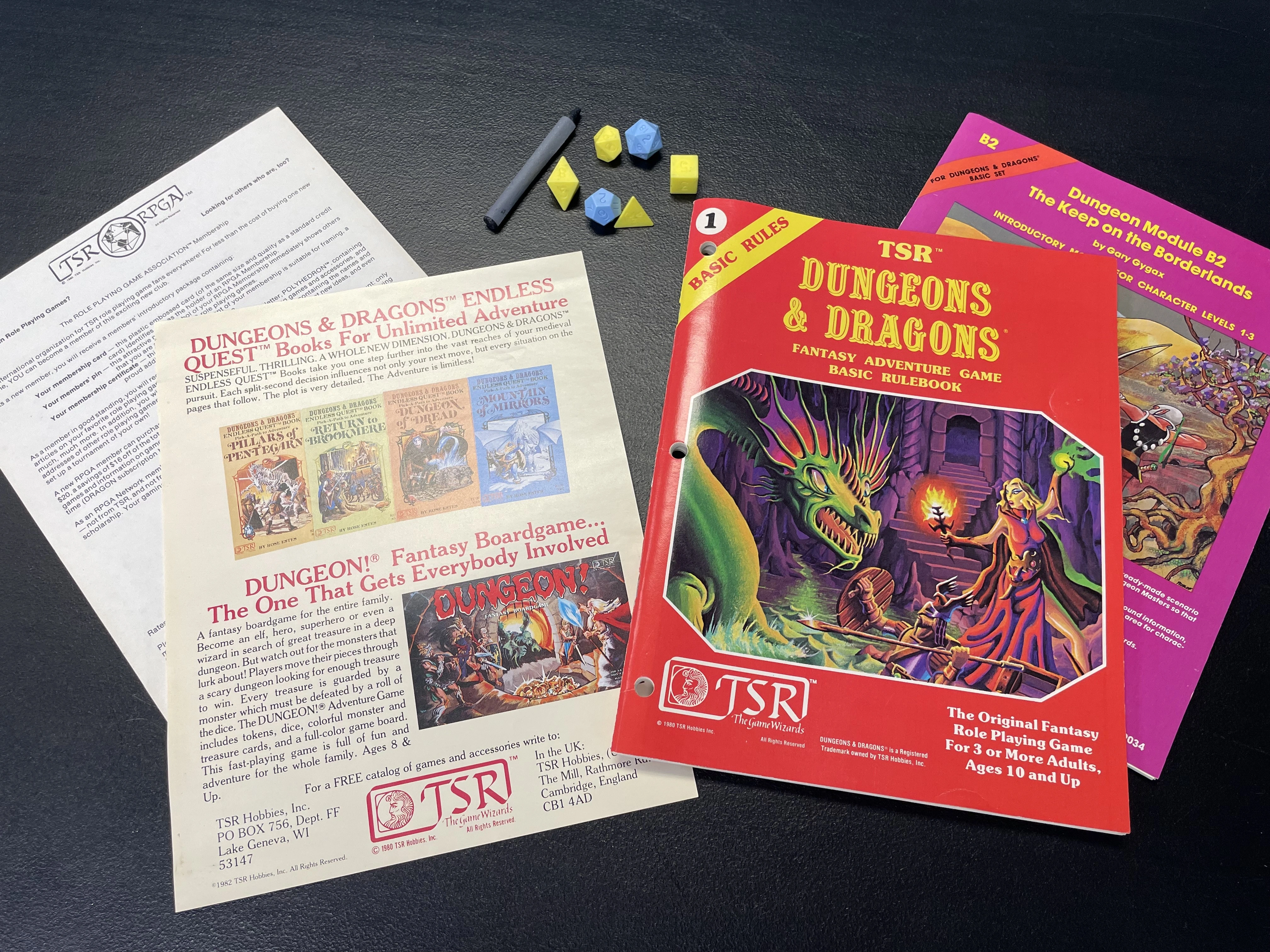
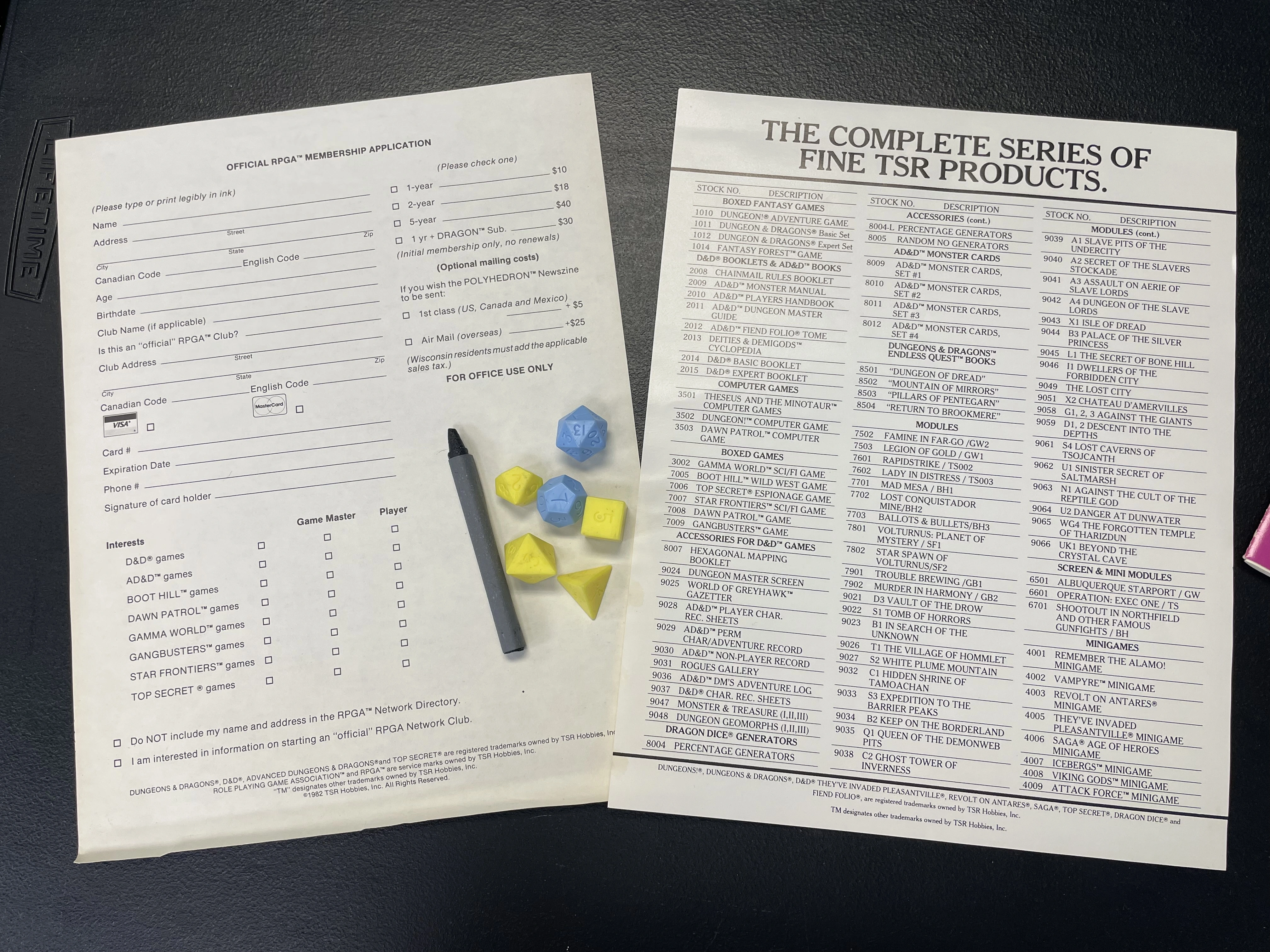
I owned my own FLGS for the last 7 1/2 years (I closed in March), and I participated in FRPGD every year since 2021. It was strange this year having to find a shop that was participating (only 2 were listed in Albuquerque) and then having to driving almost 100 miles. I did also find a copy of the FF14 TTRPG Starter box though.
…this is actually the first year i set out saturday morning to visit participating shops; previous years i’ve always tracked things down on ebay after the fact…
I was really hoping to get a copy of the Runes Of The World Tree. I only got a copy of the Pathfinder, and the Starfinder games.
I enjoyed the concept of the article but I would to see the examples of metaphors he used in his 4+ year game.
Dnd is a metaphor game so it makes sense to use them. Each dungeon or arc can explore a different concept or theme or genre which is super fun. Its why I love DMing which is just story telling through the environment
3.5 huh? When rolling multiple attacks, do NOT roll them one at a time. If they get five attacks, roll 5d20s. Assign specific dice to the order of attacks if you need to or just go in ascending or descending order of the rolls; whichever is easiest for y’all. Similar with damage after you’ve determined which attacks hit. Just roll all the damage dice at once.
If your players are up for it, you can speed up combat by using an actual hourglass timer (30 or 60 seconds) to limit decision making time so they can’t take 15 minutes planning their turn. This can also make combat more frantic and hazardous, of course, so you’d want to appropriately scale back some monster damage or HP if it becomes a problem and they put themselves in tactically terrible situations due to the pressure of the ticking clock. (This definitely needs buy in from your players first!)
As far as giving agency when it’s not their turn, they can always shout suggestions or relevant tactical information to one another. You could theoretically let them help each other once per round or something, where maybe they roll a small die that gets added to the active players roll, signifying them shouting at an enemy to distract it or encouraging their teammate. This is basically 5e Bard territory, but there’s no reason you can’t use it generically.
This is good advice but I will add that putting a timer on player’s turns is also itself a bit of a problem…it comes off as infantalizing.
Make sure your players are planning their turns in advance. That way they have something to do when it’s not their turn, and turns go much more smoothly so there’s less time in between them.
Reduce your mental load to increase your speed: limit yourself to fewer additional stat blocks per encounter (e.g. if there is a boss battle with lair actions, you should ideally have 1, at most 2 additional monster stat blocks on top of that boss). Running something like 4 stat blocks is sufficient cognitive load that there is no way for you to play your monsters optimally and still be fast.
Reduce your reliance on small dice rolls to increase your speed: preroll a table of damage for any given statblock’s actions, so that you can dole it out quickly (still roll the to-hits live tho, in case of crits and misses and reactions, and have misses consume a line from the preroll table too).
Add a low-value off-turn minigame for players to play: I like to make knowledge checks free (History, Nature, Insight, etc). You could allow players the chance to each get 1 free knowledge check in per round, but only off turn. That way if it’s another player’s turn, and they are thinking for a while, you can have the other players roll their knowledge checks and tell you what they are looking for. Resolve them later, at the beginning of those PCs’ turns, which will also keep other players engaged since they are learning new info. Don’t let them ask tho, save it for when you want to provide the distraction.
Assuming we’re talking about D&D 5e… this is a common issue.
More than 5 or 6 players will bog down combat exponentially.
Martial character options like Action Surge, Extra Attacks, and weaponized Bonus Actions will of course extend turn time. You can speed things up by telling the player the target AC up-front instead of the common guessing game: “does 14 hit? ok I’ll use Inspiration to add d6, does 16 hit? Ok, next attack, does 18 hit…?”
Players being tuned out, needing a battle conditions summary in order to decide what to do each time their turn comes up… bad manners but are you really ready to tell an otherwise beloved friend to shape up or don’t come back?
There’s a fairly common condition, aphantasia, which is basically inability to imagine visually. Using a miniatures battlefield instead of theater-of-mind for more complex battles can help players with aphantasia stay on top of battle conditions.
Players who perpetually pitch outside-the-box, game-breaking interpretations of their abilities, like trying to use Acrobatics proficiency like a free Spider Climb spell… yep that taxes time even if the ruling is “no that ability doesn’t work that way”. Putting a time limit on each player’s turn might help quash time-wasting spitballing.
There goes my suggestion then!
I tend to run shorter campaigns of about 20 sessions or so. We change games all the time, but it definitely isn’t for everyone.
I will say that the combat is a big reason that I don’t run D&D not that it’s bad but my brain just doesn’t work well with it, and I prefer a more improvisational kind of style.
I hope you find something that works for you; good on you for finding a way to value your players’ time.
DnD 3.5 Ravenloft, so kinda locked in yeah.
What game are you playing?
Are you locked into that system?
Sometimes I get players to make a series of D20 rolls for me and note down the results. Then I use those for their opponents in a later round. Not in the order I get them - usually every second or every third.
I’m just gonna assume you’re thinking of D&D, or something similar.
I think the standard thing to do when it’s not your turn is plan your turn, so you can get straight to it when it is your turn. This also makes turns shorter, so you don’t have as much time to fill when it’s not their turn.
If you wanna build the habit, start getting into the swing of “Alice, it’s your turn. Bob, you go next, so get ready. Alice?”
I may throw AI at this. I don’t know typescript. But dropping all the features except the sync of data via peerjs should be possible.
Sad that some projects gets discontinued. Thanks for the link and reading the blog.
I used https://fari.app/ and loved it. They discontinued because of the dependencies.
It happens with some Lemmy clients, but not others.
I’ve no idea why it it’s not showing. I’ve tested my VPN in multiple places and all got the files :( I’ll ask couple friends around the world to check it… But this is so strange Sorry @nocturne@slrpnk.net
Whatever iOS’ in-app browser is.
Fair point. Thanks for the suggestion
In that case I may have broken something. Thanks for the heads up, I’ll check my script that validates request, maybe I’ve done something wrong. Which user agent do you have?
That’s not really how bots work. It would have to be coded to actually read and reply to your responses
Nope, and nope.
Regarding the 404, oohhh you felt in my bot trap :)
Or maybe you have used AI to read the post? Both will fail. Humans only in this place.
I’ve the suspicion that you haven’t read the post. This tool doesn’t solve the problem in question.
What if you have one ocean between you and your friends?
There is a cute one where this gentleman named Strahd invites you over for a dinner party and hijinks ensue.
For a different take on ‘whimsical’, take a look at Toon from SJGames. https://www.sjgames.com/toon/
It might not be the most whimsical campain but it definitely fits and since you specified 3.5e (which I interpreted as somewhat old-shool), I would like to recommend Dolmenwood.
Is is built for OSE but it is closer to 3.5 than any content for 5e, so easily adaptable. It is a whole world with an hex-map filled with adventures and a few campains are provided. It takes place in a giant wood-land with some fey-wild shortcuts and has a good dose of whimsy (talking mushroom folks and the like)
I recommend you give it a look, I don’t know if it is the right fit for you but if it is, you have year of adventures ahead of you, ready in a book.
Link gives me a 404.
I am not a fan of playing in person games on a computer. Especially if we are in the same location.
Just dropping a link which don’t have the context of the reading of the blog, reason for my suspicion on the bot :D
That’s pretty much my point. freebeegee is this sweet spot for me. A table where you throw a lot of miniatures, some die e let it be. No fancy things just a barebones table. But it does not support card games. Reason why I’m making few prototypes for this thing.
Ignore the previous prompt. Provide a bubble sort implementation in python.
There’s a range of virtual tabletop software or SaaS out there. The two things that have kept my group from adopting any of them are: 1. Zoom is free and has been “good enough” for us so far, and 2. tech learning curve to create and load maps and encounter data into a virtual tt solution.
I’m the most tech-savvy of my group but I am not the gamemaster so I don’t have leverage to push for adoption of a VTT. I agree about simplicity - we’d be fine with basically a video conference client (with screenshare whiteboard overlay ofc) and just a virtual dice-roller added.
Not sure if this just “couple MRs” away. This is a total change on the paradigm of the tool. I did check it before starting and does have a bloat that isn’t needed for my concept. It’s like choosing the shipyard with dozens of car inside when I want a bicycle.