 RetroFed
eicker, eicker@lemmy.world
Instance: lemmy.world
Joined: 3 weeks ago
Posts: 18
Comments: 166
Hi! 👋 I’m Gerrit and in love with the Internet since 1994. 💞 Media ▹ Communication 👨🔬 Entrepreneur & Consultant at eicker® [iCare] ⏻ Reinschauen: eicker.TV 📲 Get in touch! 📇🇩🇪🇬🇧 #Fedizen #AI #Tech #Media #Sovereignty
Posts and Comments by eicker, eicker@lemmy.world

 technology
 europe





Comments by eicker, eicker@lemmy.world
The industry keeps benchmarking against other labs instead of against user needs: If a 3.5GB model answers 95% of everyday questions well enough, the remaining few percent has to justify hundreds of gigabytes of weights, huge energy bills and constant cloud costs.
Stock prices aren’t proof of being right, but they do show investors can change their minds a lot faster than the narratives do.
Apple’s marketing deserves skepticism, but the technical argument is separate. Local inference does not eliminate giant training clusters, it mainly cuts inference costs, latency and improves privacy. Apple still uses cloud models when needed.
Cook’s biggest product might be expectation management. He rarely promises tomorrow’s miracle, which buys Apple room to ship when it suits them instead of when Wall Street gets impatient.
Apple has always been unusually willing to sacrifice short term hype for long term positioning. That does not guarantee they are right, but it is a very different bet from spending hundreds of billions assuming demand will eventually justify the buildout. If AI demand disappoints, discipline suddenly looks a lot more valuable than scale.
About 4+ maxed M4 Studios, I guess. But that‘s not the point: in 80%+ of cases, people won’t need that kind of AI model to solve their problems.
Raw capability is only one metric: A local model probably will not beat the best cloud model any time soon, but it does not need to. If it handles 80 to 90% of everyday tasks instantly, privately and at near zero marginal cost, that is a huge win. Reserve the cloud for the genuinely hard requests, not every prompt.
Hehe… 😈
Absolutely. Looking forward to seeing the next generation of Macs.
The decentralised operation of LLMs would also be significantly simpler and cheaper for the use of decentralised renewable energy sources.
I’m waiting for the next generation of Mac Mini and Mac Studio.
The present: Open Weight AI, such as Kimi’s, is already almost exactly as good as ClosedAI from Anthropic and »OpenAI«.
It would seem so. On the other hand, it is puzzling that they did not also allocate the necessary resources to the development of LLMs. 🤷
The interesting part is not whether Apple wins the biggest model race, but whether it changes the economics: If enough AI runs locally, every token avoided is cloud capacity nobody has to build. That is a very different business model from selling ever more cloud compute.
It’s easy to underestimate how different these facilities are: Traditional data centres are built to run millions of separate workloads efficiently. AI data centres are engineered to make tens of thousands of GPUs act like one giant supercomputer. The building may look similar, but the power, cooling, networking and economics are almost an entirely different industry.
The market is fragmented across the Member States, each of which conducts its own research. That is precisely what needs to change. Hopefully, this approach will work.
This is a significant step for Europe’s AI ambitions. Access to large scale compute has become one of the biggest barriers to building competitive AI models. If executed well, these gigafactories could give European startups, researchers, and companies the infrastructure they need to innovate at home instead of relying almost entirely on US or Chinese providers.
This is exactly how the DSA is supposed to work: Once a platform reaches sufficient scale and societal impact, it faces higher transparency and accountability requirements regardless of whether it’s social media, gaming, or AI. If anything, it would be more surprising if major AI platforms weren’t eventually included.
These are purely paper profits.
Unfortunately, it is highly likely to take decades before Meta loses its relevance: the network effects are enormous, and the vast majority of people over 35 will probably only leave Instagram and (from the age of 60) Facebook completely in exceptional circumstances. And I don’t even want to get started on WhatsApp…

Apparently long enough for a Finnish town. The technologies aren’t really competitors: They’re complementary technologies for different jobs.
Exactly. That’s what makes it so compelling. No scarce minerals, no exotic chemistry, no billion Euro manufacturing plants. Sometimes the best solutions are the simplest ones.
The »kill switch« debate exists because the US proved it could flip one: Even if the restriction was temporary, it reminded governments and businesses that access to critical AI can depend on political decisions made in Washington. That’s exactly why digital sovereignty, OWAI for AI sovereignty in particular, has gone from a niche concern to a strategic priority.
A giant thermal battery storing heat instead of electricity is exactly the kind of engineering we need more of. It won’t replace lithium batteries or solve every energy problem, but district heating is a huge source of emissions in cold countries. Sometimes the smartest climate tech isn’t flashy AI: it’s hot rocks and good physics. 💪😎✌️
Finland’s radical answer to renewable energy’s biggest headache: The world’s largest sand battery (cnbc.com)
Perfect shouldn’t become the enemy of better. Open Weight AI isn’t Open Source AI, but it’s a huge improvement over Closed AI where you get neither the weights nor the training pipeline.
The irony is that platforms spent years making anonymity optional, then built engagement systems that rewarded the worst actors anyway. Now the proposed fix is more identity, more biometric data and more addictive UX.
Ultimately, everyone, because associations, clubs and small towns are mainly or exclusively active on Facebook: anyone who wants to take part will still have to use Facebook. 🤷
They didn’t short rockets: They shorted Elon Musk’s promise machine. For years he’s sold investors a never ending stream of revolutionary breakthroughs that were always just around the corner. Eventually reality catches up. Even the world’s best engineers can’t justify a valuation built on perpetual hype instead of consistently delivered results.
Wall Street spent years pricing Tesla like a future AI empire instead of a car company. Now investors are getting a reminder that robotaxis, humanoids and promises don’t magically pay today’s bills. Reality has an annoying habit of showing up right after earnings season.
More and fresh is better.
Zuck seems to be trying to boost his data for the facial recognition feature on Meta glasses. 🙈
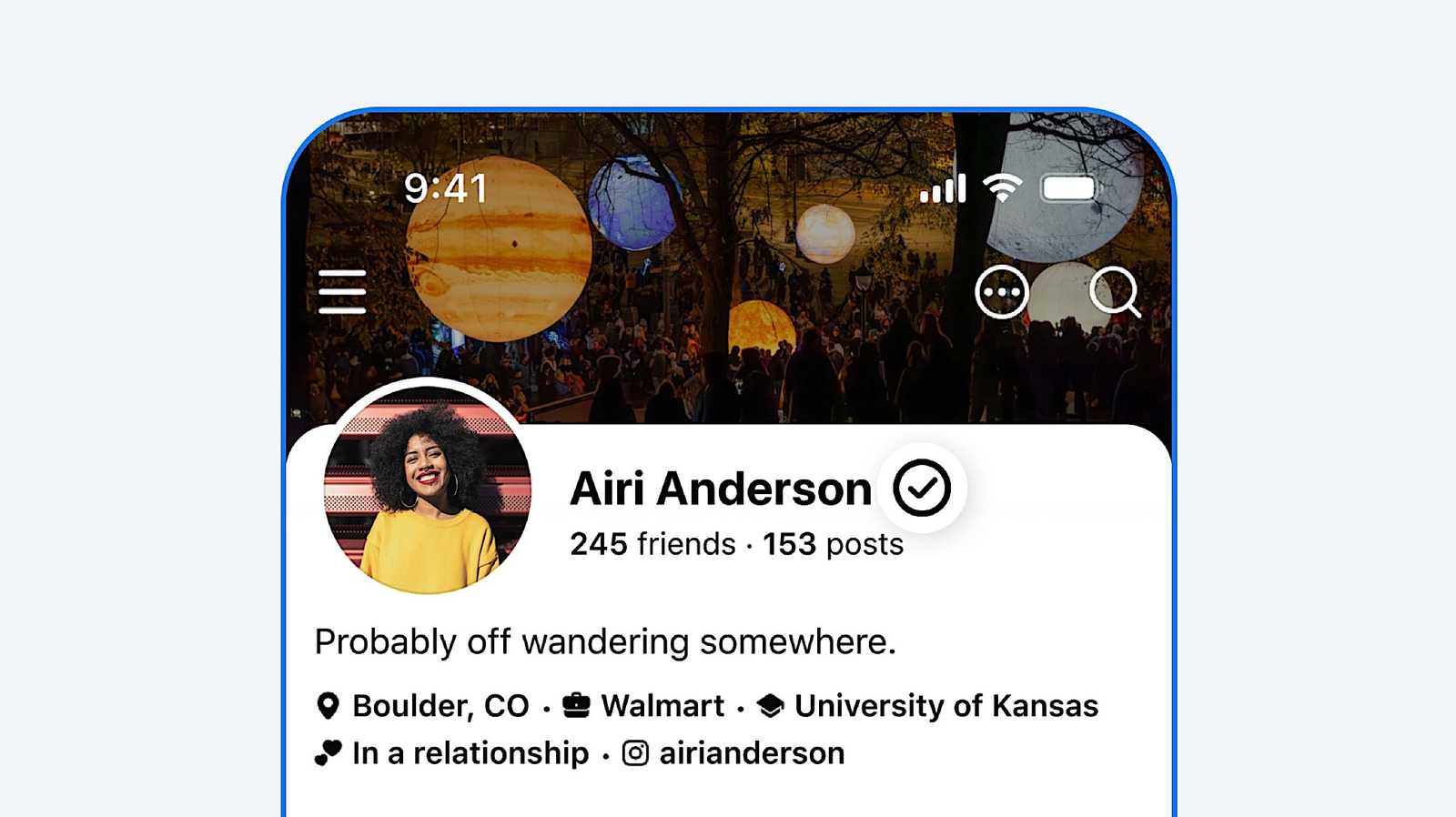
Meta launches new Facebook Verified badge for actual, real humans (engadget.com)
OpenAI is a good reminder that mission statements and business incentives don’t always stay aligned. That said, I’d judge DeepSeek less by the rhetoric and more by what they actually release. Hype is cheap: open weights, reproducible results and useful tools are much harder to fake.
This. The frontier race is about building the smartest generalist, but most companies don’t need that. They need a specialist tuned to their workflows. Narrower scope means smaller models, lower costs, faster inference and often better results. General models become the foundation, not the finished product. It’s still all to play for! 💪😎✌️
That’s either incredibly idealistic or a very smart strategy: Open models grow ecosystems faster than walled gardens, but compute still decides who gets to play at the highest level. If AGI really becomes shared infrastructure, the moat shifts from models to chips, data and execution.
DeepSeek's Liang Wenfeng Breaks His Silence: In a rare four-hour talk, the reclusive founder reveals an almost Daoist philosophy of AI—AGI as a tide no company can own... (fredgao.com)
You’re mixing two separate issues: A sandbox escape is evidence the containment failed, not proof the model permanently learned from stolen data. If OpenAI later trained on exfiltrated material that would be a serious allegation, but that requires evidence. Otherwise it’s fair to criticise the security failure without assuming facts that have not been shown.
That’s assuming security is something you solve once. It isn’t. Every security system is built by humans, tested by humans, and eventually bypassed by humans. We don’t abandon operating systems because vulnerabilities exist: we patch them, improve them, and layer defenses. AI changes the pace, not the fundamental nature of cybersecurity.
It was just as you’d expect: This isn’t an AI problem! It’s the same human problem we’ve always had: misconfigurations, weak security, and avoidable mistakes. AI just punishes those errors faster and more effectively than traditional software ever could. Anyone who continues to rest will be severely punished.