 RetroFed
70ms, 70ms@lemmy.sdf.org
Instance: lemmy.sdf.org
Joined: 3 years ago
Posts: 50
Comments: 0
Instance: lemmy.sdf.org
Joined: 3 years ago
Posts: 50
Comments: 0

 h5n1_avianflu








Bird flu cases are likely being missed in dairy workers, experts say (nbcnews.com)
Experts maintain the milk supply is safe. Their focus is on keeping the people who work with cows from getting sick.
The U.S. government is taking action to stop ‘cow flu.’ Is it too little, too late? (science.org)
The U.S. government announced new measures yesterday to slow the spread of the H5N1 influenza virus among cattle, following the revelation that milk sold commercially in 10 states contained fragments of the virus. An order issued by the U.S. Department of Agriculture (USDA) restricts the movement of dairy cattle between states and mandates the reporting of infected cows.
1 in 5 US retail milk samples test positive for H5N1 avian flu fragments (cidrap.umn.edu)
A senior official from the US Food and Drug Administration (FDA) said today that its nationwide survey of retail milk has found remnants of H5N1 avian flu viruses in one in five samples, with the highest concentrations in regions where outbreaks in dairy cattle have been reported.
As bird flu spreads in cows, fractured U.S. response has echoes of early covid (msn.com)
The response has echoes of the early days of 2020, when the coronavirus began its deadly march around the world. Today, some officials and experts express frustration that more livestock herds aren’t being tested for avian flu, and that when tests and epidemiological studies are conducted, results aren’t shared fast enough or with enough detail. They fear that the delays could allow the pathogen to move unchecked — and potentially acquire the genetic machinery needed to spread swiftly among people. One dairy worker in Texas has already fallen ill amid the outbreak, the second U.S. case ever of this type of bird flu.
This may be our last chance to halt bird flu in humans and we are blowing it. (nytimes.com)
“So far there is only one confirmed human case. Rick Bright, an expert on the H5N1 virus who served on President Joe Biden’s coronavirus advisory board, said, ‘there’s a fine line between one person and 10 people with H5N1. By the time we’ve detected 10, it’s probably too late’.”
US orders testing for certain dairy cows after H5N1 avian flu remnants found in retail milk (cidrap.umn.edu)
A day after the Food and Drug Administration (FDA) announced that H5N1 avian flu fragments have been found in retail milk samples, the US Department of Agriculture (USDA) today announced that lactating dairy cows must be tested before interstate transport.
U.S. government in hot seat for response to growing cow flu outbreak (science.org)
“Thijs Kuiken, an avian influenza researcher at Erasmus Medical Center, says the “very sparse” information released by the U.S. government has international implications, too. State and federal animal health authorities have “abundant information … that [has] not been made public, but would be informative for health professionals and scientists” in the United States and abroad, he says, “to be able to better assess the outbreak and take measures, both for animal health and for human health.” He notes that even the new sequences released by USDA do not include locations of the samples or the date they were taken. The release appears to include data from only 39 cows.”
H5N1 bird flu virus particles found in pasteurized milk but FDA says commercial milk supply appears safe (statnews.com)
“The agency said it has been trying to see if it could grow virus from milk found to contain evidence of H5N1, which is the gold standard test to see if there is viable virus in a product. The lengthy statement the agency released does not explicitly say FDA laboratories were unable to find live virus in the milk samples, but it does state that its belief that commercial, pasteurized milk is safe to consume has not been altered by these findings.”
Genetic analysis reveals H5N1 flu virus outbreak in cows likely started earlier than thought (statnews.com)
The genetic data point to a single spillover event that probably occurred in late 2023, Michael Worobey, an evolutionary virologist at the University of Arizona, told STAT on Tuesday.
Avian flu comes to the Salish Sea (eopugetsound.org)
A new strain of avian flu has been sweeping the globe since 2020, leaving thousands of dead seabirds in its wake. This past summer, it arrived at a colony of Caspian terns at Rat Island in the Salish Sea, with catastrophic results.
Flu on the Brain: Identification of Highly Pathogenic Influenza in the Brains of Wild Carnivores in The Netherlands (mdpi.com)
Highly pathogenic avian influenza (HPAI) viruses circulate in wild birds and can infect domestic poultry. H5NX 2.3.4.4b is a clade of HPAI responsible for major avian epidemics seen in Europe in the 2016–2017 and 2020–2021 seasons, with the 2021–2022 season being the largest so far in terms of geographic spread and number of detections in non-avian animals [1]. While in recent months poultry infections have declined, HPAI H5NX continues to circulate in wild birds, and HPAI H5N1 genotypes have infected several mammal species in Europe, the Americas, and Asia [2]. Indeed, HPAI H5N1 detected in red foxes in The Netherlands have been found to carry a PB2-E627K mutation that increases viral replication in mammalian cells [3]. Furthermore, HPAI H5N1 was identified to have a neurotropism in these foxes, causing infection in the brain.
Avian flu update: Here’s how the strains are spreading (citizen.co.za)
South Africa’s poultry industry is under siege as it grapples with two distinct bird flu strains – H5N1 and H7N6.
Avian influenza: EFSA recommends increased protection of farms from wild birds (efsa.europa.eu)
While the situation in poultry has eased over the summer, highly pathogenic avian influenza (HPAI) virus continued to affect seabirds in Europe, mostly along coastlines. As the autumn migratory season starts, the protection of poultry and other farmed animals from wild birds should be prioritised. Biosecurity should be enhanced in fur animal farms.
Targeted surveillance to identify human infections with avian influenza virus during the influenza season 2023/24, EU/EEA (ecdc.europa.eu)
Executive summary
Science: FLIGHT RISKS - Migratory birds efficiently ferry pathogens around the world. (science.org)
Great article, definitely recommend. Excerpt:
Experts fear mass wipe-out of penguins as Antarctica braces for bird flu (telegraph.co.uk)
This is awful. 😭💔
Influenza A(H5N1) Virus Infections in 2 Free-Ranging Black Bears (Ursus americanus), Quebec, Canada (wwwnc.cdc.gov)
Abstract
Galapagos National Park reports the deaths of three birds from avian flu (galapagosconservation.org.uk)
Three birds found dead in the Galapagos Islands have tested positive for avian influenza (H5N1), according to preliminary results released by the Galapagos National Park Directorate (GNPD) on Tuesday 19 September.
Two-year trial of bird flu vaccines “too slow” say experts (dutchnews.nl)
Some 1,800 day-old chicks have been vaccinated against bird flu as a first step in a two-year trial to test the effectiveness of two vaccines but experts say the process could be speeded up.
Explainer: H5N1 Bird Flu in Mammals Sparks Fears of Virus Spreading Among Humans (washingtonpost.com)
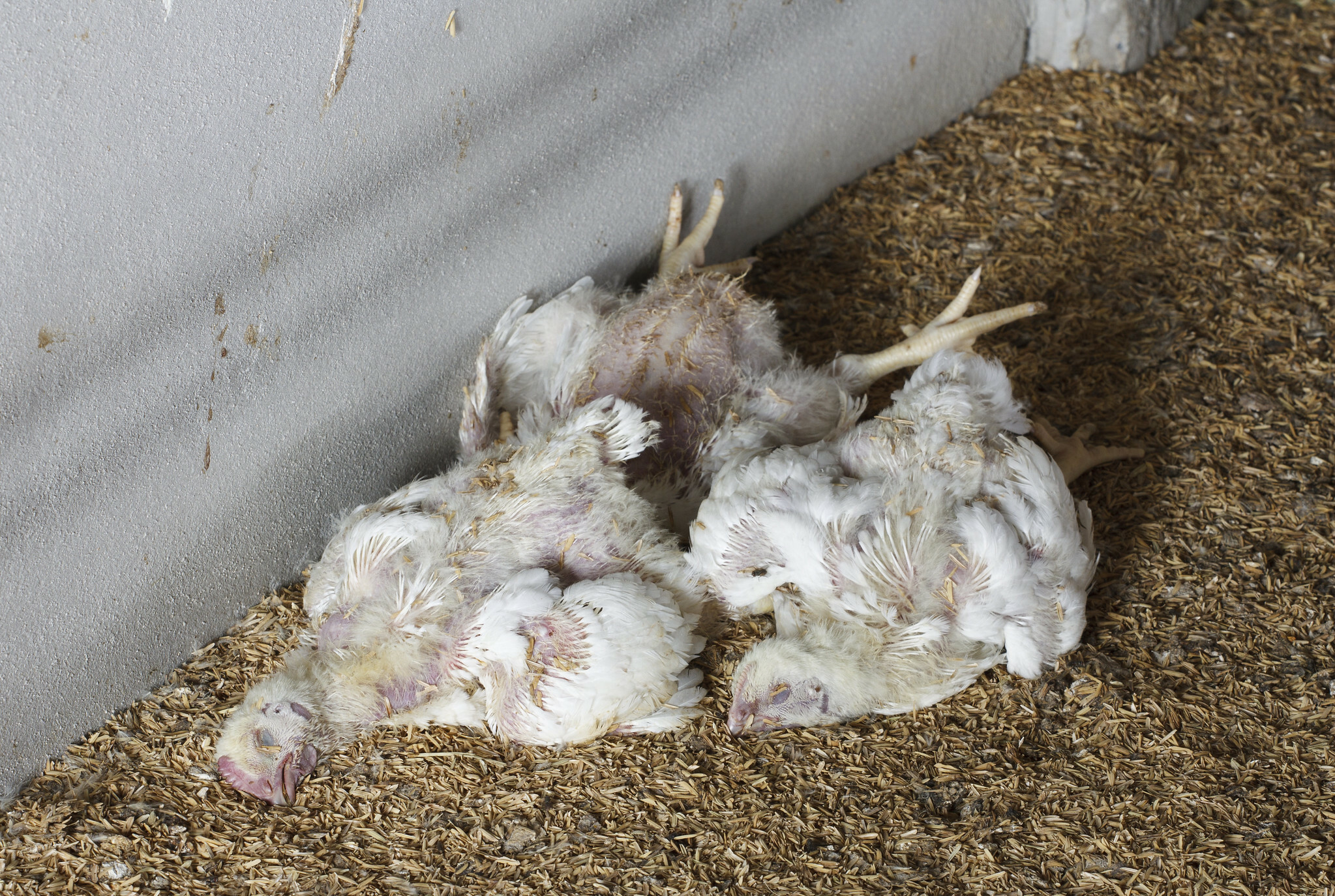
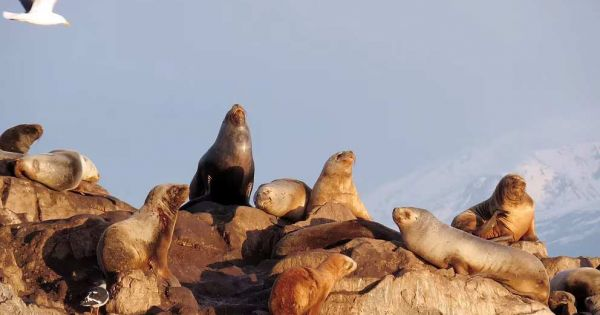
The strain of avian influenza, or bird flu, known as H5N1 has proved to be alarmingly adept at jumping continents and species. First discovered in 1996 in geese bred on a farm in southern China, the virus has rampaged through populations of captive, commercial birds in recent years, prompting governments to order the slaughter of tens of millions of turkeys, chickens and other poultry to limit the opportunity for contagion. One result: higher food prices. Carried by infected wild birds, particularly geese, swans and gulls, the virus has also been gaining a foothold in many types of mammals. That includes a small number of humans, where it has proven to be lethal. Now seemingly able to spread from mammal to mammal — as seen with mink on a Spanish farm and Peruvian sea lions — the ever-evolving virus has public-health officials on alert for any indications of the most feared outcome: human-to-human transmission that could trigger a pandemic.